
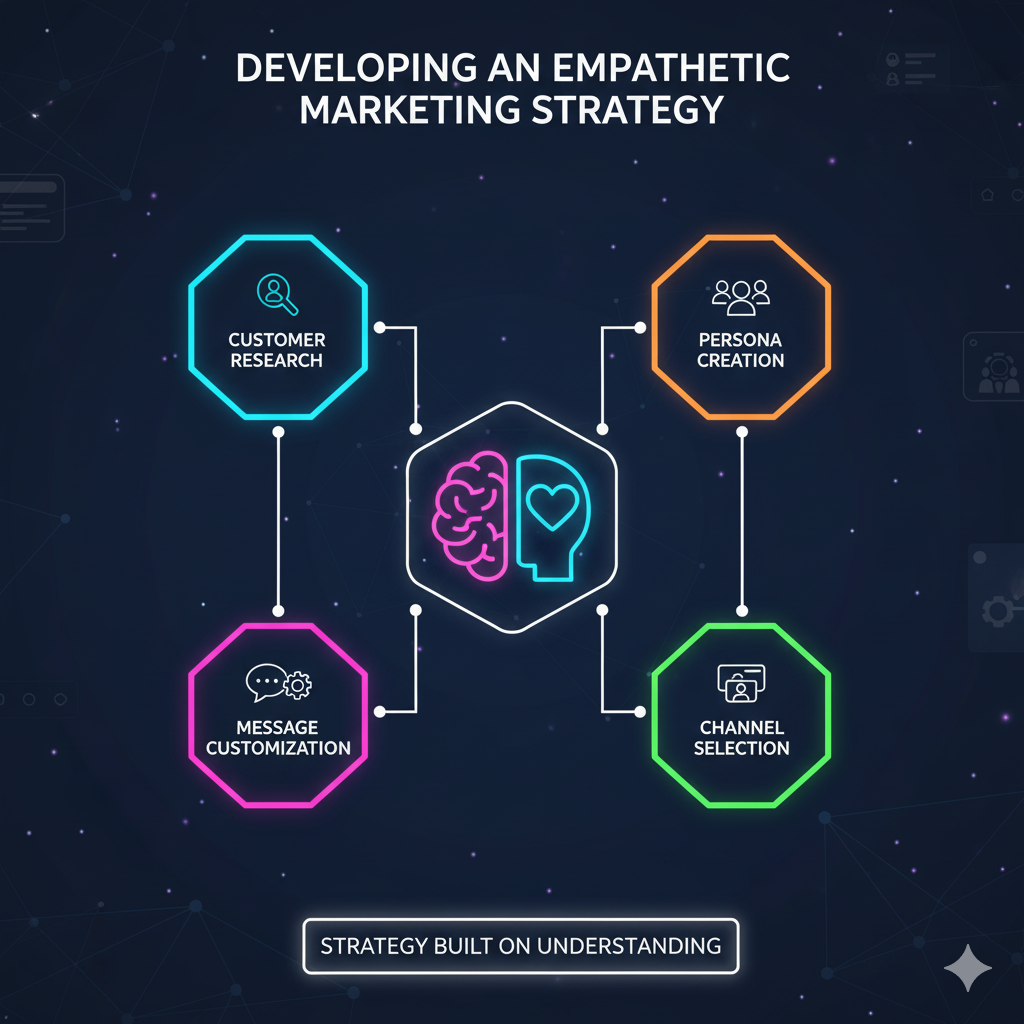
To harness the power of empathy, brands must move beyond ad-hoc campaigns and embed it within their marketing strategies at every single level.
This requires a fundamental shift from a purely transactional, product-centric mindset to a relational, customer-obsessed one that prioritizes a deep understanding of the customer’s complete emotional journey. It demands skillful storytelling, disciplined active listening, and an organizational commitment to acting on constant feedback.
As Simon Sinek, author of Start with Why, famously said, “People don’t buy what you do; they buy why you do it.” Empathy is the tool that allows us to discover and connect with that “why” in our customers’ lives.
READ MORE:
- Empathy-Based Marketing: Empathy-Based Marketing – markempai.com
- Empathy Maps: A Complete Guide: Empathy Maps: A Complete Guide – markempai.com
- Why Empathy in Marketing Is More Important Than Everything Else: Why Empathy in Marketing Is More Important Than Everything Else – markempai.com
1. Deeply Understand Your Audience Through Empathetic Research
The first and most critical step in developing an empathetic marketing strategy is to invest not just money, but significant time and intellectual curiosity in thorough, qualitative customer research. This must go far beyond basic demographics (age, location, income) and dive into the psychographics—the motivations, aspirations, fears, and daily challenges your audience faces.
For instance, a new beverage company could organize focused listening sessions or empathetic surveys designed to engage with potential customers on an emotional level. Instead of asking, “Do you like our drink?” they might ask, “Tell me about a moment in your busy day when you felt overwhelmed and what kind of small pleasure or relief would have helped?” Through this, they might discover that their target market—busy professionals—are not just seeking “quick, healthy drink options,” but are actually craving a moment of mindful pause, a tangible feeling of self-care, or a reliable energy source that doesn’t lead to a crash, all of which must fit seamlessly into their hectic, time-poor schedules.
Actionable Framework: The “5 Whys” of Customer Research
Adapted from root-cause analysis in manufacturing, this technique helps uncover deeper motivations. Start with a customer statement and ask “why” five times.
- Customer says: “I need a quick, healthy drink.”
- Why? “Because I don’t have time for a sit-down breakfast.”
- Why? “Because my mornings are chaotic getting the kids ready.”
- Why? “Because I feel guilty if I don’t ensure they have a perfect start to their day.”
- Why? “Because being a good parent is my top priority, and it’s stressful.”
- Why? “Because I often feel stretched thin and need to feel in control.”
2. Craft Relatable, Emotionally Intelligent Content
Once marketers have a nuanced understanding of their audience’s core challenges and aspirations, the next step is to craft content that tells stories authentically aligning with these lived experiences. The goal is to make the customer feel seen and understood.
For example, a travel company should move beyond showcasing pristine beaches and instead feature blogs and social posts that share personal anecdotes from travelers. These stories would highlight not just the beautiful locations, but the emotional fulfillment of stepping outside one’s comfort zone, the anxiety of navigating a foreign airport, the joy of a spontaneous connection with a local, or the profound peace of disconnecting from digital life. These narratives evoke genuine emotions and create relatable scenarios that customers can see themselves in, ultimately leading them toward booking their next adventure not as a vacation, but as a transformation.
As empathy becomes central to content creation, brands must also utilize multimedia elements like short-form documentaries, customer-led video diaries, or interactive stories that allow consumers to engage with the narrative on their own terms. Dr. Jennifer Aaker, a professor at Stanford Graduate School of Business and author of The Dragonfly Effect, argues that “Stories are remembered up to 22 times more than facts alone.” When potential customers see their own aspirations and struggles reflected in your content, they don’t just notice your brand; they feel a connection to it.
Incorporating Psychological Principles:
Use the SUCCESs model from Chip and Dan Heath’s book Made to Stick to ensure your empathetic content is effective. Make it:
- Simple: Focus on one core emotional message.
- Unexpected: Break patterns to grab attention (e.g., show the messy, real side of travel).
- Concrete: Use tangible details and sensory language.
- Credible: Use real customer stories, not actor-led testimonials.
- Emotional: Appeal to core feelings like belonging, achievement, or security.
- Stories: Use narrative structure to drive the message home.
3. Tailor Products, Services, and Experiences to Customer Needs
Empathy cannot stop at the marketing department’s door. The most authentic empathetic strategies involve a feedback loop where customer insights directly influence product development, customer service, and the entire user experience. Companies must be willing to adapt their product line and service offerings based on these empathetic insights.
If a skincare brand finds through candid customer testimonials and social listening that users are increasingly concerned about ingredient transparency and environmental impact, they could pivot their entire brand narrative. They would shift from promoting “anti-aging” to championing “skin wellness” and “planet-friendly practices,” highlighting their natural, sustainably sourced, and cruelty-free product line. This isn’t just a marketing spin; it’s a brand evolution driven by customer values.
A powerful case study is Patagonia. Their “Don’t Buy This Jacket” campaign was a radical act of empathy for the environment, aligning with their customers’ deep-seated values about sustainability. It demonstrated an understanding that their customers’ identity was tied to being responsible stewards of the planet, leading to fierce loyalty and, ironically, increased sales. They proved that “Empathy is good for business,” as stated by Yvon Chouinard, Patagonia’s founder.
The Strategic Empathy Loop: Listen, Interpret, Act, and Communicate
Developing an empathetic strategy is not a one-time project but a continuous cycle:
- Listen: Use multiple channels (surveys, social listening, support call analysis, direct interviews) to gather raw customer feedback.
- Interpret: Go beyond the data to understand the underlying emotion. What is the customer feeling? Use frameworks like Jobs to Be Done to understand the progress they are trying to make in their lives.
- Act: Implement changes based on these insights—whether in product, messaging, or experience.
- Communicate: Close the loop by telling your customers you heard them. This final step, often missed, is where trust is solidified. It shows you weren’t just listening for your own benefit, but for theirs.
Conclusion: From Transaction to Transformation
An empathetic marketing strategy ultimately moves your brand from being a mere vendor in a transaction to becoming a valued partner in your customer’s life story. It requires courage, vulnerability, and a relentless focus on the human being behind the data point. By investing in deep research, crafting emotionally intelligent content, and tailoring your entire operation to customer needs, you build more than brand awareness—you build brand affinity, advocacy, and a legacy of genuine connection.
FAQ: Empathetic Marketing
Further Reading & Research:
- Empathy-Based Marketing: Empathy-Based Marketing – markempai.com
- Empathy Maps: A Complete Guide: Empathy Maps: A Complete Guide – markempai.com
- Why Empathy in Marketing Is More Important Than Everything Else: Why Empathy in Marketing Is More Important Than Everything Else – markempai.com
- Why Empathy in Marketing Is Important: Why Empathy in Marketing Is Important – markempai.com
- Why Empathy in Marketing Matters More Than Ever: An Evidence-Based Guide: Why Empathy in Marketing Matters More Than Ever: An Evidence-Based Guide – markempai.com
- The Importance of Empathy in Marketing: The Importance of Empathy in Marketing: A Three-Part Series – markempai.com
- What Is Empathy in Marketing and Why It Matters: The Definitive Guide: What Is Empathy in Marketing and Why It Matters: The Definitive Guide – markempai.com
- Empathy in Marketing: The Definitive Guide to Connecting With Customers & Driving Unshakeable Brand Loyalty:Empathy in Marketing: The Definitive Guide to Connecting With Customers & Driving Unshakeable Brand Loyalty – markempai.com
- Empathetic Marketing: The Power of Empathy in Advertising That Builds Unbreakable Brand Loyalty: Empathetic Marketing: The Power of Empathy in Advertising That Builds Unbreakable Brand Loyalty – markempai.com
- The Role of Empathy in Modern Marketing: How Emotional Intelligence Drives Sustainable Business Success: The Role of Empathy in Modern Marketing: How Emotional Intelligence Drives Sustainable Business Success – markempai.com
- Empathetic Marketing: The Ultimate Guide to Building Authentic Customer Connections in 2025: Empathetic Marketing: The Ultimate Guide to Building Authentic Customer Connections in 2025 – markempai.com
Ready to Transform Your Marketing Through Empathy?
If you’re ready to harness the proven power of empathetic marketing, the team at Markempai is here to help. With our unique blend of psychological insight, strategic rigor, and creative excellence, we deliver measurable results that strengthen both your brand and your bottom line.
markempai.com |info@markempai.com