
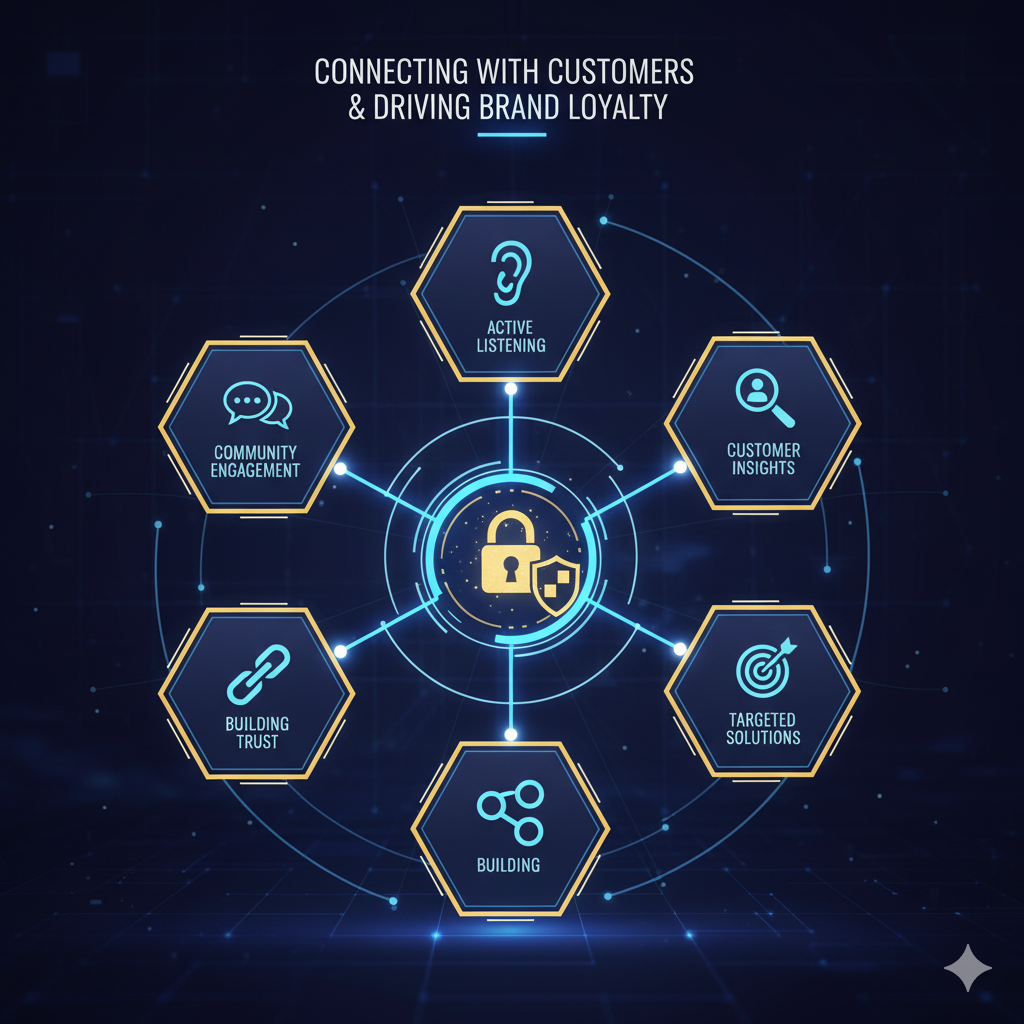
In the relentless pursuit of growth and market share, businesses often overlook their most valuable asset: a loyal customer.
But earning genuine loyalty—the kind that withstands competitive pressures and market fluctuations—is exceptionally difficult. It requires moving beyond transactional relationships to build deep, emotional connections with your target audience, a task that is often easier said than done.
This challenge, however, is one of the most worthwhile pursuits in modern business. According to a landmark study published in the Harvard Business Review, “emotionally connected” customers are at least 52% more valuable, on average, than those who are merely “highly satisfied.” These customers buy more, stay longer, and advocate more freely. Connecting with your customers on this profound emotional level doesn’t just feel good—it can result in a major, measurable increase in profits to fuel your next stage of growth.
READ MORE:
- Empathy-Based Marketing: Empathy-Based Marketing – markempai.com
- Empathy Maps: A Complete Guide: Empathy Maps: A Complete Guide – markempai.com
- Why Empathy in Marketing Is More Important Than Everything Else: Why Empathy in Marketing Is More Important Than Everything Else – markempai.com
One underrated but exceptionally powerful strategy to achieve this is empathetic marketing. Brands that master it consistently outperform their competitors in terms of trust, customer retention, and lifetime value. However, leveraging empathy authentically and effectively requires more than good intentions; it demands a strategic, disciplined approach.
Why Empathy Matters in Marketing Today: The Data-Driven Case
Before diving into implementation, it’s crucial to define what empathy means within a marketing context. It extends beyond general compassion to a strategic, operationalized understanding of—and action upon—customers’ feelings, perspectives, and unspoken needs.
Dr. Brené Brown, a research professor and bestselling author, provides a foundational definition: “Empathy is a choice, and it’s a vulnerable choice. Because in order to connect with you, I have to connect with something in myself that knows that feeling.” For marketers, this means connecting with the universal human experiences that drive customer behavior.
Here are the four key data-backed reasons why empathy is no longer optional:
- The Transparency Imperative: A 2025 Stackla Report found that 75% of customers now value brand transparency and authenticity above all else. Showing empathy in your marketing helps you connect with this majority by demonstrating what you truly stand for and validating their experiences.
- The Rise of Human-Centric Brands: More brands are adopting a human-centric approach, prioritizing people’s emotional needs in every part of the business. Dove’s “Self-Esteem Project,” which has educated over 82 million young people on body confidence, is a prime example. These companies tend to outperform on trust, thanks largely to their consistent, action-oriented empathy for their target audience.
- Values-Based Loyalty in a Polarized World: The 2024 Edelman Trust Barometer revealed that 89% of people are loyal to brands that share their values. This figure has grown significantly in recent years as social media has amplified the impact of cultural issues and crises. Today’s consumers expect the companies they buy from to stand up for what’s right, and showing empathy is a primary vehicle for demonstrating shared values.
- The Amplification Effect of Emotional Content: Another reason to use empathetic marketing is its viral potential. When your content features a message that aligns with your audience’s core values, they become your marketing team. A Wharton School of Business study found that content that evokes high-arousal emotions (awe, excitement, amusement) is 30% more likely to be shared. This type of content sparks online conversations, increases organic reach, and forges the emotional bonds that lead to fierce loyalty.
How To Practice Empathy in Your Marketing Strategy: A Five-Pillar Framework
Empathy can be a powerful tool for growing your business, but it requires precision to avoid appearing performative. Your message must walk a fine line between connecting with your audience authentically and achieving your business goals. Embracing the following five-pillar framework can help you make it happen.
Pillar 1: Customer-Centric Messaging Rooted in Psychological Principles
Your foundational message must be centered around customers’ values, not your product’s features.
A key step is using language that reflects your customers’ lived experiences and emotions. This leverages the similarity-attraction effect, a well-documented psychological phenomenon where people are more likely to form positive relationships with those who share common traits, values, or communication styles. Your goal is to position your brand to be on the “same side” of an issue as its target audience.
Advanced Application: Utilize the “Jobs to Be Done” (JTBD) framework, pioneered by the late Harvard Business School professor Clayton Christensen. JTBD theory posits that customers don’t buy products; they “hire” them to make progress in a specific circumstance. Empathetic messaging addresses the core “job” and the accompanying social and emotional drivers. For a deep dive into this, explore our guide on building a customer-centric marketing strategy from the ground up.
Pillar 2: Active Listening and Social Intelligence
To craft customer-centric messaging, you must first understand how your audience speaks and feels. This requires moving beyond traditional surveys to active social listening.
Monitor social media platforms like X, Instagram, Facebook, and LinkedIn to see how customers are speaking about your brand, its industry, and their own pain points. This helps you understand not just what they need, but the language they use to describe it and the kinds of solutions they imagine.
Advanced Application: Implement a closed-loop feedback system. Develop an empathetic hypothesis based on social listening, create a minimal viable campaign, and test it on a small segment. Track KPIs like emotional engagement (shares, comments, saves) and sentiment analysis. Use these insights to refine your approach before a full-scale launch. This process is detailed in our resource on creating a customer feedback system that drives growth.
Pillar 3: Personalized Content That Tells Human Stories
Once you have a validated approach, express it through personalized, story-driven content. Instead of broadcasting to a demographic, speak to the individual. For example, if you want to connect on sustainability, tell a story centered on a specific person representative of your target audience.
A company focused on sustainability might tell one story about a young activist and another about a grandparent, both united by a common concern for future generations.
Advanced Application: Apply the SUCCESs model from Chip and Dan Heath’s book Made to Stick to your stories. Ensure they are Simple, Unexpected, Concrete, Credible, Emotional, and told through Stories. This methodology is central to our philosophy of crafting empathy-driven content that forges a community.
Pillar 4: Inclusive Marketing That Honors Diversity
It’s critical to represent diverse perspectives authentically. People can feel more than one way about an issue, and inclusive marketing ensures your company appeals to a broader spectrum of your audience.
You can create more inclusive materials by:
- Building a diverse team that reflects your audience’s varied values and experiences.
- Collaborating with diverse creators who genuinely represent different segments of your ideal buyers.
- Conducting thorough cultural research to avoid harmful stereotypes and misunderstandings.
- Pre-testing campaigns across multiple demographics to assess inclusivity before a full launch.
Pillar 5: Purpose-Driven Campaigns Backed by Authentic Action
Build your empathy-focused campaigns around causes your customers genuinely care about, but ensure you back your message with concrete action. You cannot credibly advocate for sustainability if your supply chain is opaque and wasteful. Customers, especially Gen Z, are adept at spotting this disconnect.
As Simon Sinek, author of Start With Why, states, “People don’t buy what you do; they buy why you do it.” Your “why” must be evident in your operations.
Advanced Application: Tie your mission-driven actions directly to customer engagement. For example, pledge to donate a percentage of every purchase to a relevant charity or commit to a verifiable sustainability goal. This not only increases revenue but builds immense goodwill. This level of integrity is fundamental to building unshakeable trust with your customers.
Measuring the Impact of Empathy in Marketing: Beyond Vanity Metrics
While the emotional impact of empathy can seem intangible, its business outcomes are highly measurable. It’s crucial to move beyond surface-level metrics and track KPIs that reflect deepened relationships.
Key performance indicators to monitor include:
- Testimonial Sentiment Analysis: Use AI tools to analyze the emotional language in customer reviews and testimonials before and after empathy-driven campaigns.
- Customer Lifetime Value (LTV): Compare the LTV of customers acquired through empathetic campaigns versus traditional channels.
- Net Promoter Score (NPS) & Customer Effort Score (CES): Track these scores to measure changes in loyalty and perceived ease of doing business.
- Repeat Purchase Rate: A direct indicator of increased loyalty and satisfaction.
- Referral Rates: Measure if word-of-mouth recommendations increase.
- Social Sentiment: Quantify shifts in the emotional tone of brand mentions on social media.
What To Avoid: The Pitfalls of Performative Empathy
Let’s wrap up by reviewing critical mistakes that can undermine your efforts, with insights from leading experts.
- Avoid Performative Empathy at All Costs: Customers possess a keen “inauthenticity radar.” If you don’t genuinely believe the message you’re promoting—and back it with tangible action—the damage to your reputation can be severe. As Natalie Henley, CEO of Volume Nine Digital Marketing, advises, “I’d say this is a great time to NOT use AI to write the messaging, so that it sounds human, then if you are having a gut-check concern about it sounding opportunistic, run it past a few people internally.”
- Don’t Assume—Research: Launching a campaign without a deep, qualitative understanding of customer sentiment is a recipe for a tone-deaf initiative that alienates your audience. Leverage the emotional intelligence principles we outline for marketing leaders to guide your research.
- Respect the Line with Personalization: While personalization is powerful, over-personalization can feel invasive and creepy. Test your approach to ensure you’re striking the right balance between relevance and respect for privacy.
- Navigate Controversy with Care: Consumer values can evolve. While it’s important to stand for something, carefully consider the long-term implications of wading into highly controversial subjects. Ensure any stance is deeply aligned with your brand’s core, non-negotiable values.
Drive Sustainable Customer Loyalty Through Empathy
Practicing more empathy in your marketing is not a tactic; it’s a transformative strategy that can connect your brand with its target audience on a profoundly human level. The right approach creates emotional connections that drive unparalleled loyalty through genuine value alignment.
By committing to deep research, customer-centric messaging, and inclusive, action-backed campaigns, you can build a brand that people don’t just buy from, but believe in.
FAQ: Empathetic Marketing
Further Reading & Research:
- Empathy-Based Marketing: Empathy-Based Marketing – markempai.com
- Empathy Maps: A Complete Guide: Empathy Maps: A Complete Guide – markempai.com
- Why Empathy in Marketing Is More Important Than Everything Else: Why Empathy in Marketing Is More Important Than Everything Else – markempai.com
- Why Empathy in Marketing Is Important: Why Empathy in Marketing Is Important – markempai.com
- Why Empathy in Marketing Matters More Than Ever: An Evidence-Based Guide: Why Empathy in Marketing Matters More Than Ever: An Evidence-Based Guide – markempai.com
- The Importance of Empathy in Marketing: The Importance of Empathy in Marketing: A Three-Part Series – markempai.com
- Developing an Empathetic Marketing Strategy: A Framework for Authentic Connection: Developing an Empathetic Marketing Strategy: A Framework for Authentic Connection – markempai.com
- What Is Empathy in Marketing and Why It Matters: The Definitive Guide: What Is Empathy in Marketing and Why It Matters: The Definitive Guide – markempai.com
- Empathetic Marketing: The Power of Empathy in Advertising That Builds Unbreakable Brand Loyalty: Empathetic Marketing: The Power of Empathy in Advertising That Builds Unbreakable Brand Loyalty – markempai.com
- The Role of Empathy in Modern Marketing: How Emotional Intelligence Drives Sustainable Business Success: The Role of Empathy in Modern Marketing: How Emotional Intelligence Drives Sustainable Business Success – markempai.com
- Empathetic Marketing: The Ultimate Guide to Building Authentic Customer Connections in 2025: Empathetic Marketing: The Ultimate Guide to Building Authentic Customer Connections in 2025 – markempai.com
Ready to Transform Your Marketing Through Empathy?
If you’re ready to harness the proven power of empathetic marketing, the team at Markempai is here to help. With our unique blend of psychological insight, strategic rigor, and creative excellence, we deliver measurable results that strengthen both your brand and your bottom line.
markempai.com |info@markempai.com