
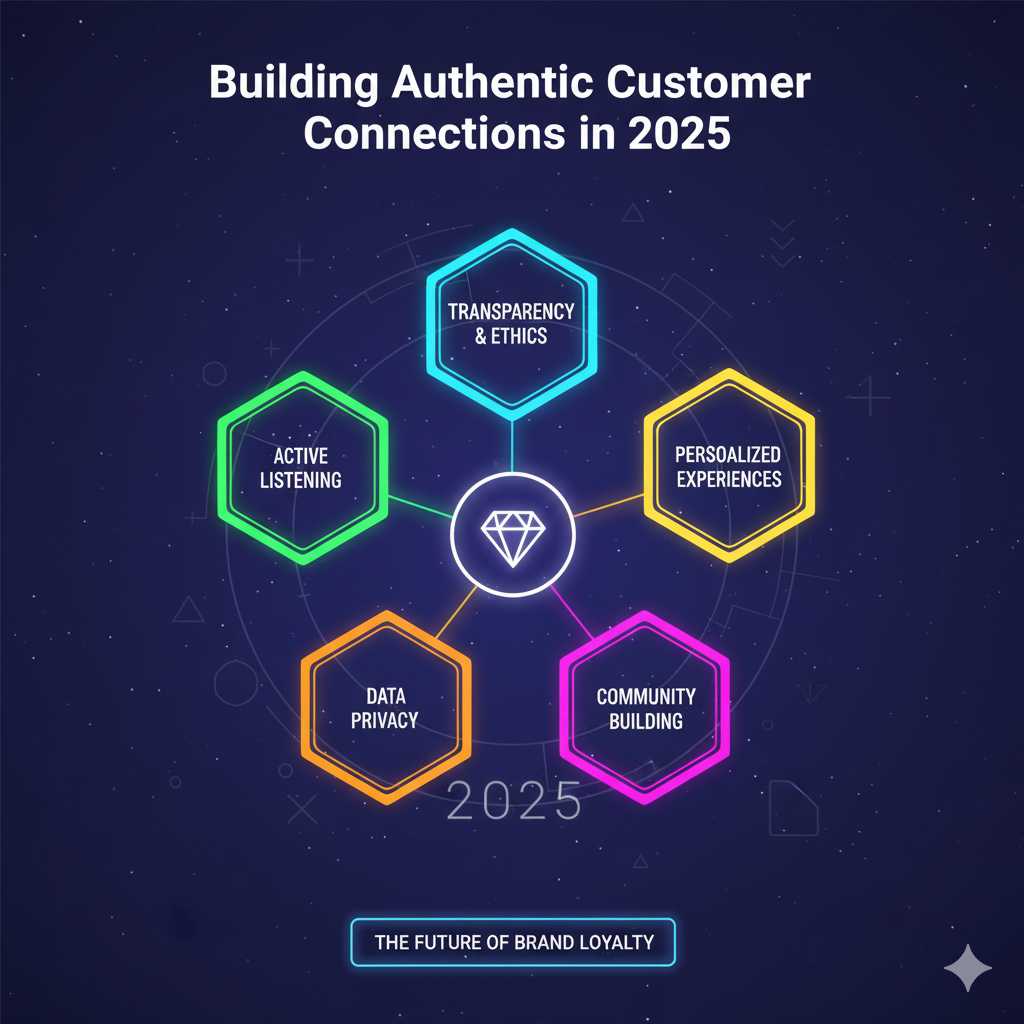
Creating genuine, lasting connections with your brand’s audience has become more crucial than ever in today’s increasingly skeptical marketplace.
Even more concerning, according to Reputation’s 2024 Global Consumer Trust Report, only 18% of consumers trust brand claims across any sector—highlighting the significant trust deficit that brands from London to Los Angeles must overcome.
Empathetic marketing offers a powerful, evidence-based solution to this challenge by putting your customers’ true feelings, experiences, and emotional realities at the centre of your strategy. This comprehensive guide explores how understanding your audience on a deeper psychological level can transform your marketing approach and deliver measurable results in customer loyalty, brand perception, and ultimately, your revenue growth across global markets.
What is Empathetic Marketing? Definition and Evolution
Empathetic marketing represents a strategic approach that involves putting yourself in your customers’ shoes to craft messages, content, and experiences that genuinely resonate with their core needs, challenges, and aspirations. Unlike traditional marketing approaches that focus primarily on product features or competitive advantages, empathetic marketing prioritises understanding how your customers feel and what they truly value at an emotional level.
As Nduva Mathuva, CEO Markempai, explains: “Empathetic marketing isn’t about telling customers what they need—it’s about demonstrating that you understand what they’re already experiencing. It’s the difference between shouting your message and having a conversation that actually listens to the response.”
The Critical Distinction Between Sympathy and Empathy in Marketing
It’s essential for marketers in Chicago, New York, Toronto, and beyond to understand that sympathy and empathy are not interchangeable concepts in strategic marketing.
Sympathy involves acknowledging someone’s problems or challenges from the outside—like feeling sad for a friend who has experienced a loss. It’s recognising emotion without necessarily understanding its depth or origin.
Empathy, however, goes significantly deeper both psychologically and strategically. It requires actively putting yourself in someone else’s position and understanding their feelings from their internal perspective. In marketing terms, this means seeing your product, service, and brand through your customers’ eyes rather than your own organizational lens.
This distinction is crucial because effective marketing solutions address not just what customers need but why they need it and how it makes them feel. While sympathy enables you to recognise how someone feels, true empathy helps you understand why they might be feeling that way and how your brand can authentically address those underlying emotions.
The Historical Development of Empathetic Approaches in Business
Empathetic marketing isn’t entirely new—in fact, empathy represents one of the core pillars of marketing—but its strategic prominence has grown substantially in recent years. The concept evolved from relationship marketing theories of the 1980s and 1990s, which began shifting focus from transactions to connections. However, the digital revolution of the 2000s initially pushed marketing toward purely data-driven approaches that sometimes overlooked crucial emotional factors.
The pendulum has swung back dramatically since 2020, when global crises forced brands worldwide to reconsider how they communicate with increasingly stressed consumers. The pandemic created a watershed moment for empathetic marketing as consumers faced unprecedented challenges, and tone-deaf messaging was quickly called out and rejected across social media platforms.
Think of empathetic marketing as similar to how we’ve evolved our understanding of physical health. Just as we now recognise that wellbeing requires addressing both physical symptoms and emotional states, effective marketing must address both rational needs and emotional experiences to create lasting customer relationships.
The Scientific Basis for Emotional Connection in Marketing
The power of empathetic marketing isn’t just theoretical—it’s backed by robust neuroscience and psychological research. Groundbreaking work by neuroscientist Antonio Damasio found that emotions are biologically vital for decision-making. His studies of patients who couldn’t experience emotions due to brain injuries revealed that while they could think logically, they struggled profoundly to make concrete decisions.
This has profound implications for marketers globally: without triggering an emotional response, your customers may find it difficult to choose your brand over competitors, regardless of logical advantages.
Further research from Princeton University using fMRI technology shows that when people feel understood, their brains release oxytocin, often called the “trust hormone.” This neurochemical response creates genuine feelings of connection and safety that rational arguments alone cannot achieve.
As Dr. James Harrington, Professor of Marketing Psychology at Lancaster University, confirms: “The neuroscience is clear—humans make decisions based on emotional connections first and rational justification second. Brands that understand this sequence and respect both aspects will consistently outperform competitors who focus solely on logical arguments.”
Trust and Brand Perception in Global Consumers
Recent government data paints a concerning picture of consumer trust, particularly in the UK market. According to the Consumer Detriment Survey 2024, 7 out of 10 UK consumers experienced some form of consumer detriment, with the total cost amounting to a staggering £71.2 billion. This erosion of trust creates both challenges and opportunities for brands willing to adopt more empathetic, transparent approaches.
The consequences of this trust deficit are quantifiable across global markets: according to Accenture’s comprehensive study of 30,000 consumers worldwide, 47% of consumers globally have abandoned brands perceived as lacking empathy in their communications, while 63% will pay premium prices for brands demonstrating genuine customer understanding. Additionally, 66% prioritise brands with transparent values and 52% seek brands standing for societal issues, proving empathetic marketing’s universal relevance across cultures and economies.
Can your brand afford to ignore the importance of empathy in marketing? The solution lies in empathy-driven brand actions supported by data:
- Value alignment – 69% of UK consumers now expect brands to address societal inequities in messaging (Geneys, 2021)
- Authentic dialogue – 74% demand brands actively listen to customer concerns through participatory campaigns (WE study, 2018)
- Ethical transparency – 94% of consumers are more likely to be loyal to a completely transparent brand (NielsenIQ, 2016)
These findings highlight an elemental shift—consumers from Manchester to Melbourne now view brand empathy not as virtue-signalling, but as table stakes for market relevance and trustworthiness.
Key Components of Successful Empathetic Marketing
Successful empathetic marketing requires several interconnected components working in harmony across your organization. These components can be divided into inward-looking actions (how your organisation thinks and functions) and outward-looking actions (how you deliver products, services, and communications).
Inward-Looking Actions: Company Culture and Mindset
The foundation of empathetic marketing begins within your organisation’s culture and leadership. This includes:
- Empathetic leadership: Senior management must demonstrate and value empathy in decision-making and collect data to understand the overall sentiment across various stakeholder groups
- Customer-centric culture: Ensuring every department understands its impact on customer experience and emotional connection
- Bias awareness: Recognising how personal preferences can distort understanding of customer needs and perspectives
Research from Dr. Johannes Huttula revealed a concerning trend: the more empathetic marketers believed themselves to be, the worse they actually performed at predicting customer reactions. This highlights the critical importance of recognising our own biases rather than assuming we understand our customers’ experiences.
To cultivate genuine empathy within your organisation, companies must invest in training that helps staff recognise their biases and collect real-life data. According to data from the Competition and Markets Authority (CMA), brands that demonstrate a deep understanding of their customers’ challenges are better positioned to navigate new consumer protection regulations that came into effect in 2024.
Outward-Looking Actions: Products, Services and Communication
Once the internal foundation is established, empathetic marketing manifests externally through:
- Solution-focused products: Creating offerings that genuinely address customer pain points and emotional needs
- Transparent communication: Being honest about capabilities and limitations while maintaining emotional intelligence
- Respectful engagement: Giving customers meaningful choices in how they interact with your brand across touchpoints
- Responsible messaging: Avoiding manipulative tactics like creating unwarranted FOMO or exploiting emotional vulnerabilities
Recent examples of excellent outward-looking empathetic actions include brands offering opt-out options for potentially triggering holiday marketing. For instance, Away luggage reported that when they offered customers the choice to opt out of Mother’s and Father’s Day emails, more than 4,000 subscribers did so, and another 250 sent messages thanking the company for its thoughtfulness and emotional intelligence.
Strategic Implementation of Empathetic Marketing
How can your organisation move from understanding empathetic marketing concepts to actually implementing them effectively? Here is a comprehensive framework for building a robust empathetic marketing strategy foundation.
Developing Comprehensive Buyer Personas with Emotional Depth
Effective empathetic marketing begins with truly understanding your audience at a psychological level. This goes far beyond basic demographics to include:
- Psychological drivers and core motivations
- Day-to-day challenges and emotional frustrations
- Aspirational goals and deepest desires
- Emotional responses to various situations and stressors
When creating audience or buyer personas, ask yourself these crucial questions: What keeps my customers awake at night? What would make them feel truly understood by our brand? What wins, big or small, are they seeking in their lives that extend beyond our product category?
Creating Effective Empathy Maps for Strategic Insight
Empathy maps provide a structured, visual approach to documenting customer perspectives across four key dimensions:
- Think and Feel: Internal thoughts, beliefs, and emotional states
- See: What customers observe in their environment and social circles
- Hear: Messages they receive from various sources including media and peers
- Say and Do: Public actions, statements, and behavioral patterns
Additionally, document their pain points and gains—what specifically frustrates them and what they hope to achieve emotionally and practically.
Empathy mapping is particularly effective for cross-functional team exercises, bringing together insights from different departments that interact with customers in various contexts. This approach creates a 360-degree portrait of your customer’s world—the more perspectives you include, the more complete and nuanced the picture becomes.
Balancing Data and Emotional Intelligence in Decision-Making
Modern marketing requires both quantitative insights and qualitative understanding. However, these elements aren’t always easy to reconcile—balancing “anecdata” (stated personal preferences) with data on actual decisions people make represents a crucial aspect of planning effective marketing campaigns and building deeply resonating branding.
People often answer questions based on idealised versions of themselves rather than their actual behavior. This is why someone might claim to listen to BBC Radio 4 when they actually listen to pop music during their daily commute.
Case Studies: Empathetic Marketing Success Stories Across Industries
Waitrose & Partners: Cost of Living Response with Emotional Intelligence
During the peak of the cost-of-living crisis in 2022–2023, Waitrose demonstrated remarkable empathy by fundamentally rethinking its messaging and product offerings. Rather than simply promoting premium products as before, the retailer:
- Created clearly labelled budget-friendly meal solutions (Grocery Gazette, 2022)
- Adjusted loyalty programme rewards to emphasise immediate value (Grocery Gazette, 2023)
- Communicated price locks on essential items with complete transparency (The Grocer, 2023)
- Shifted advertising to emphasise the quality-to-price ratio rather than exclusivity (MarketingWeek, 2023)
By acknowledging the financial pressures their customers faced—even those in higher income brackets—Waitrose strengthened brand loyalty during a challenging economic period. This approach put the customer at the forefront by genuinely considering their changed circumstances rather than maintaining pre-crisis messaging that would have felt disconnected from reality.
Monzo: Transforming Financial Services Communication Through Empathy
UK digital bank Monzo has revolutionised financial services communication through consistently empathetic marketing. Recognising the anxiety many people feel about money management, Monzo:
- Redesigned notifications to use everyday language rather than intimidating banking jargon
- Created optional spending controls for vulnerable customers (MandoGroup, 2018)
- Offered gambling blocks with built-in 24-hour cooling-off periods to support recovery
- Provided clear opt-out options for credit product marketing to reduce financial pressure
What makes Monzo’s approach particularly effective is how it balances digital efficiency with emotional intelligence. Despite being an app-based service, the brand has created experiences that feel remarkably human, understanding, and supportive of customers’ financial wellbeing.
St John Ambulance: Crisis Response Communication with Compassion
When the pandemic hit in 2020, St John Ambulance faced a dual challenge: responding to an unprecedented health emergency while also addressing a funding crisis as traditional fundraising channels disappeared overnight. Their empathetic marketing response included:
- Transparent communication about their financial challenges without guilt-tripping
- Creation of digital first aid training for parents during lockdowns
- Virtual volunteer recruitment that acknowledged people’s desire to help safely
- Content that balanced urgent appeals with practical support and education
By recognising both the anxiety and the desire to help that many people felt, the organisation maintained public support while providing genuine value during a crisis. Their approach exemplifies what Ipsos researchers describe as “building empathy-driven connection with people” by understanding their perspectives, sharing their concerns, and taking actions to improve their lives.
Common Challenges & Practical Solutions in Empathetic Marketing
Implementing empathetic marketing can encounter significant obstacles. Here are the most common challenges and practical approaches to overcome them based on our experience with clients across multiple industries:
Avoiding Tone-Deaf Messaging During Crises
The pandemic highlighted how quickly empathetic marketing can become insincere when every brand suddenly adopts similar messaging without authentic connection to their core values.
Solution: Rather than jumping on trending topics, develop a communication framework that aligns with your brand’s authentic voice and values. This allows you to respond appropriately without appearing opportunistic or disingenuous. Establish clear guidelines for crisis communication that maintains brand authenticity.
Overcoming Internal Biases in Marketing Teams
As Dr. Huttula’s research demonstrated, marketers often overestimate their empathetic abilities and rely on personal preferences when predicting customer reactions, leading to campaigns that resonate internally but miss externally.
Solution: Implement structured processes for testing assumptions before launching campaigns. Use diverse focus groups, A/B testing of messaging, and regular customer feedback loops to challenge internal biases. Ensure marketing teams represent diverse perspectives and experiences that reflect your actual customer base.
Finding the Balance Between Automation and Human Touch
As marketing becomes increasingly automated with AI and machine learning, maintaining genuine empathy becomes more challenging but even more crucial for differentiation.
Solution: Use automation to handle routine processes while preserving human interaction for emotionally significant touchpoints. For example, chatbots can handle basic inquiries, but should transfer to human agents for complex or sensitive issues. Create clear guidelines for when automated communication is appropriate and when personal intervention is needed to maintain emotional connection.
Future Trends in Empathetic Marketing (2025-2030)
The Impact of AI on Personalised Empathetic Marketing
Artificial intelligence will increasingly help brands identify emotional cues and respond appropriately at scale. However, the most successful implementations will use AI to augment rather than replace human empathy. Key developments include:
- Advanced sentiment analysis that recognises complex emotional states and subtle cues
- AI-driven empathy mapping that identifies unmet emotional needs and opportunities
- Hybrid approaches that combine technological efficiency with human oversight and intuition
- Ethical frameworks for emotional AI to prevent manipulation while enhancing understanding
Evolving Consumer Expectations in a Post-Pandemic World
The pandemic accelerated changes in consumer expectations around brand empathy that will continue evolving. Key trends include:
- Increased demand for brands to take authentic stands on social issues while respecting diverse perspectives
- Higher expectations for accessibility and inclusion in all communications and experiences
- Growing preference for brands that demonstrate understanding of mental wellbeing and work-life balance
- Continued appreciation for opt-out options on potentially triggering content and communications
Regulatory Developments Affecting Marketing Practices
The Digital Markets, Competition and Consumers Act 2024 (DMCCA) has empowered the Competition and Markets Authority (CMA) with new enforcement capabilities, representing a significant shift in the UK regulatory landscape. Brands practising authentic empathetic marketing will be better positioned to navigate these changes by already prioritizing consumer interests and transparent communication in their core operations.
Expert Commentary: Industry Insights on Empathetic Marketing
Nduva mathuva, CEO Markempai, emphasizes: “Empathetic marketing represents the most significant competitive advantage in today’s saturated marketplace. It’s not about manipulating emotions but about creating genuine value through understanding. The brands that will dominate their categories over the next decade are those that can combine data-driven insights with profound emotional intelligence to create experiences that feel human at scale.”
He continues: “What we’re seeing across markets from London to Singapore is that consumers have developed sophisticated ‘authenticity radars.’ They can detect performative empathy from genuine understanding instantly. The future belongs to brands that build empathy into their organizational DNA rather than treating it as a marketing tactic.”
FAQ: Empathetic Marketing Essentials
Q: How is empathetic marketing different from emotional marketing?
A: Emotional marketing focuses on evoking specific feelings in customers, while empathetic marketing involves understanding and responding to the emotions customers already experience. The former is about triggering reactions; the latter is about recognising and addressing existing needs with authenticity and respect.
Q: Can empathetic marketing be measured effectively?
A: Yes, through a combination of traditional metrics (conversion rates, customer lifetime value) and emotional indicators (sentiment analysis, qualitative feedback, brand perception studies, emotional engagement scores).
Q: Is empathetic marketing appropriate for all industries and business models?
A: Absolutely, though implementation varies by sector. Even in highly technical B2B contexts, purchasing decisions are made by humans with emotional needs and concerns. The key is identifying the appropriate emotional dimensions relevant to your specific audience and industry context.
Q: How can small businesses implement empathetic marketing with limited resources?
A: Small businesses often have a natural advantage in empathetic marketing through their direct customer relationships and organizational agility. Focus on gathering qualitative feedback, training customer-facing staff on empathetic communication, and prioritizing authentic connection over polished production values.
Q: What’s the relationship between empathetic marketing and corporate social responsibility?
A: While related, they’re distinct concepts. CSR focuses on a company’s broader societal impact, while empathetic marketing addresses how well the company understands and responds to customer needs and emotions. However, authentic CSR initiatives can certainly demonstrate empathy toward community concerns when executed genuinely.
Conclusion: Building Your Empathetic Marketing Strategy for Sustainable Growth
Empathetic marketing represents a fundamental shift from seeing customers as conversion opportunities to understanding them as complex individuals with unique needs, emotions, and lived experiences. It’s a well-researched fact that throughout all market sectors around the world, consumer trust continues to decline; brands that master empathetic approaches gain a significant competitive advantage that’s difficult for competitors to replicate.
The most effective empathetic marketing strategies combine robust internal cultures with authentic external actions, balancing data-driven insights with genuine emotional understanding. As we’ve seen from both research and case studies, this approach delivers measurable benefits in customer loyalty, brand perception, and financial performance across industries and markets.
To begin or enhance your empathetic marketing journey:
- Invest in truly understanding your customers beyond surface-level demographics
- Cultivate awareness of biases within your marketing team and organization
- Create frameworks for balancing efficiency with emotional connection
- Measure both functional performance and emotional impact consistently
- Develop authentic responses to challenging situations that align with your brand values
By placing empathy at the heart of your marketing and business strategy, you create opportunities for deeper, more meaningful connections with your audience. In an era where differentiation is becoming increasingly difficult, this human-centred approach may be your most sustainable competitive advantage for long-term growth.
Further Reading & Research:
- Empathy-Based Marketing: Empathy-Based Marketing – markempai.com
- Empathy Maps: A Complete Guide: Empathy Maps: A Complete Guide – markempai.com
- Why Empathy in Marketing Is More Important Than Everything Else: Why Empathy in Marketing Is More Important Than Everything Else – markempai.com
- Why Empathy in Marketing Is Important: Why Empathy in Marketing Is Important – markempai.com
- Why Empathy in Marketing Matters More Than Ever: An Evidence-Based Guide: Why Empathy in Marketing Matters More Than Ever: An Evidence-Based Guide – markempai.com
- The Importance of Empathy in Marketing: The Importance of Empathy in Marketing: A Three-Part Series – markempai.com
- Developing an Empathetic Marketing Strategy: A Framework for Authentic Connection: Developing an Empathetic Marketing Strategy: A Framework for Authentic Connection – markempai.com
- What Is Empathy in Marketing and Why It Matters: The Definitive Guide: What Is Empathy in Marketing and Why It Matters: The Definitive Guide – markempai.com
- Empathy in Marketing: The Definitive Guide to Connecting With Customers & Driving Unshakeable Brand Loyalty: Empathy in Marketing: The Definitive Guide to Connecting With Customers & Driving Unshakeable Brand Loyalty – markempai.com
- Empathetic Marketing: The Power of Empathy in Advertising That Builds Unbreakable Brand Loyalty: Empathetic Marketing: The Power of Empathy in Advertising That Builds Unbreakable Brand Loyalty – markempai.com
- The Role of Empathy in Modern Marketing: How Emotional Intelligence Drives Sustainable Business Success: The Role of Empathy in Modern Marketing: How Emotional Intelligence Drives Sustainable Business Success – markempai.com
Ready to Transform Your Marketing Through Empathy?
If you’re ready to harness the proven power of empathetic marketing, the team at Markempai is here to help. With our unique blend of psychological insight, strategic rigor, and creative excellence, we deliver measurable results that strengthen both your brand and your bottom line.
markempai.com |info@markempai.com