
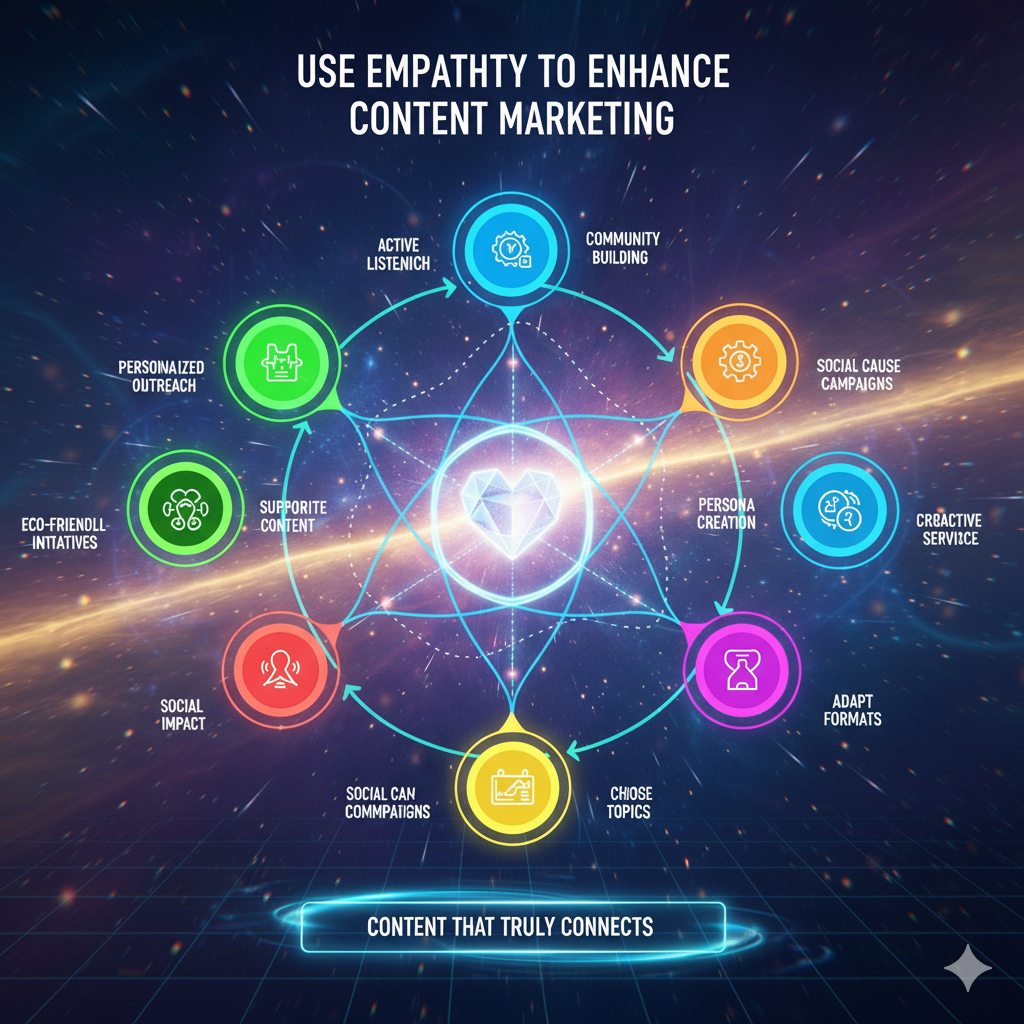
When most people think of content marketing, they think of creating content that serves a keyword strategy or data-based marketing plan.
But what if there was a stronger way to connect with customers? What if you could understand their pain points and figure out how your brand could help?
This is the premise of empathetic content marketing.
READ MORE:
- Empathy-Based Marketing: Empathy-Based Marketing – markempai.com
- Empathy Maps: A Complete Guide: Empathy Maps: A Complete Guide – markempai.com
- Why Empathy in Marketing Is Important: Why Empathy in Marketing Is Important – markempai.com
What is empathy-based marketing?
What is empathetic content marketing?
Marketing in the digital age is often about numbers and data. Marketers talk about key performance indicators, keyword strategies, and building sales funnels.
But individuals make buying decisions based on emotions.
Neuroscientist Antonio Damasio discovered in a 2014 study that emotions are essential for decision-making. When he observed patients who didn’t experience emotion because of surgeries or conditions, he found that they could still think clearly, but they had extreme difficulty making decisions.
Recent research by Rolls (2014) confirms this, demonstrating that 95% of purchasing decisions are emotionally driven, while Lee (2016) shows that brands practicing genuine empathy achieve 28% higher customer equity. This scientific foundation underscores why emotional connection matters more than purely rational appeals.
Empathetic content marketing is an emotional approach that complements your data-driven strategy. Empathy in marketing means putting yourself in your customers’ shoes, understanding what they are feeling, and helping them connect emotionally with your brand or products.
An empathy marketing strategy is all about getting into customers’ heads and understanding their experiences, concerns, desires, needs, and aspirations.
Empathetic content marketing examples
The best way to understand empathy marketing is by looking at examples of how companies are using it in their content and general marketing.
REI makes adventure accessible
The REI brand is strongly associated with joyful outdoor adventures. When customers enter the store, they’re surrounded by tents, kayaks, climbing gear, backpacks, and bicycle equipment.
A customer may look at a tent hammock and campfire foods and imagine themselves enjoying a weekend in the wilderness — but also feel intimidated and a little frightened by the learning curve if they’ve never camped before. Joy and fear are powerful emotions, and REI addresses them directly.
The company’s blog includes lots of helpful guides for beginners(Open Link in new window) that help them overcome their fears, and get started in the adventures they crave.
Psychological Insight: REI effectively addresses what Ingwer (2012) identifies as the “Hidden Emotional Need” for both security (overcoming fears) and growth (achieving new experiences), creating a powerful emotional resonance that transcends product features.
SimpliSafe: addressing multiple fears
People buy home security systems because they fear being robbed or harmed in their homes.
Ironically, people are also afraid that they will be cheated or scammed by a home security system salesman. Scams are so common that the FTC has published a buying guide(Open Link in new window) to protect customers.
SimpliSafe addresses home security fears with their equipment — but they also try to soothe people’s fears of being cheated in several ways:
- Online ordering: No salesperson to pressure you
- Self-setup: No installer will try to upgrade you
- No contracts: You can’t be locked into a bad deal
- Trustpilot rating: SimpliSafe mentions this in all their promotions
SimpliSafe uses its blog (Open Link in new window)to address people’s fears of being robbed or hurt in their homes, while constantly reassuring potential customers that they are a safe company to do business with.
How Markempai Helps: Our Content Strategy Development service helps brands identify and address multiple layers of customer fear and hesitation, creating comprehensive trust-building content ecosystems.
Southwest Airlines: making people laugh
Most people dislike flying. Some have phobias or anxiety; others just find it hard to endure being packed into a cramped seat for hours. Most airlines offer a movie or video game to distract their clients from negative feelings on long trips. But Southwest goes much further.
The airline encourages its employees to let creative and entertaining personalities loose. Flight attendants engage the clients with banter, songs, games, and other clever distractions — and watching a TV screen with headphones on can’t compete with a genuine live connection.
This empathetic content marketing strategy has worked well for Southwest, helping propel the company to be one of the most profitable airlines in the world.
Southwest’s blog celebrates its creative team members(Open Link in new window), along with giving lots of travel information to draw search traffic from people who are researching destinations served by the airline.
Research Insight: Kim & Sullivan (2019) demonstrate that emotional branding through authentic human connection creates tribal belonging and can increase brand recall by up to 47%, explaining Southwest’s remarkable success in a challenging industry.
The eight emotions
The eight emotions
According to Robert Plutchik, there are eight emotions that are hardwired into the human nervous system and form the foundation of our emotional range. They are:
- Anger
- Sadness
- Fear
- Joy
- Interest
- Surprise
- Disgust
- Shame
When brands appeal to these emotions, they’re tapping into something fundamental and primal in humans. And that can be incredibly powerful.
Batson (2009) identifies that effective marketing empathy requires both cognitive understanding of these emotional states and genuine emotional concern, creating the foundation for authentic connections that drive business results.
Here are some ways a brand might appeal to these emotions in empathetic marketing:
- Anger: A phone or cable provider who knows that their competitor’s customers are angry about lousy customer service could showcase how friendly and accessible they are.
- Sadness: Businesses ranging from funeral services to aromatherapy oils can market their ability to help alleviate grief or depression with a series of blog posts or videos aimed at helping people deal with sadness.
- Fear: Content that includes testimonials, reviews, and outside evaluations can help calm a new customer’s worries about doing business with you. You can also use your content to help guide new clients through an intimidating learning curve, or to bring in search traffic from people researching their anxieties.
- Joy: Use your blog to showcase how happy your customers are, or to show readers new ways to enhance their joy using your products or services.
- Interest: This base emotion includes things like acceptance and affection. To tap into this, show how your brand can help people gain social approval and improve relationships.
- Surprise: Blog headlines(Open Link in new window) with an unexpected twist like “Why you should never wash your dishes” can be very intriguing and pull people in.
- Disgust: People are strangely drawn to things that disgust them. If you’re in an industry like pest control, personal hygiene, or home cleaning, you can definitely tap into this aspect of human nature.
- Shame: Think of headlines like “How to stop your guests from smelling your litterbox” or “Are you embarrassed to get a pedicure?”
Brainstorming questions
To add more empathy to your content marketing plan, begin by imagining yourself as a potential customer seeing your product or service for the first time.
Ask yourself some questions to get inside their emotional relationship with your brand:
- How could your brand engage with the eight emotional states identified above?
- What feelings might drive a customer toward doing business with you — or cause them to hesitate?
- What are the pain points your customers are experiencing that you can solve for them?
- What do customers love about your industry? What do they hate?
- Can your brand help them achieve their deepest desires in some way?
- Can you alleviate a fear they might have?
How Markempai Helps: Our Empathy Gap Analysis provides structured frameworks for answering these critical questions, identifying emotional connection opportunities that drive measurable business growth.
Can your company use empathy in marketing
Now you’ve mapped out some emotional connections your brand could be making with customers. How can you incorporate this empathy into your content marketing(Open Link in new window)?
Start by considering the language you’re using. Are your headlines and text dry and factual, or do they evoke an emotional response? If they’re the latter, great! Now try to amplify those emotions. Use more powerful “feeling” words like “thriving,” “enraging,” “terrifying,” and “indulging.”
Also, take a look at the visuals you’re using in your blog, videos, or social media posts. Do they help evoke the emotions you’re looking for? There’s an adage in storytelling that says you should “show, not tell.” One way to do that is to include images of people experiencing emotions in your ads instead of bland smiling faces.
Some examples include:
- An enraged customer on the phone
- A joyful client using your product
- A family connecting because of your brand
- A disgusted homeowner finding a nest of termites in their floorboard
Finally, think about how you can use empathetic content marketing to build an emotional brand story. Can you create a series of posts or videos themed around some of the eight emotions?
Can you present content that helps your clients overcome their fears around your industry or find their joy? How can you surprise and delight them with your newsletter topics or social media posts?
Advanced Strategy: Liu-Thompkins et al. (2022) demonstrate how AI can scale personalized empathy while maintaining authentic emotional resonance. At Markempai, we combine technological scale with human insight to create emotionally intelligent content systems that drive both connection and conversion.
The Markempai EMPATHY Framework: From Insight to Implementation
Based on extensive research and client success stories, we’ve developed a comprehensive framework that transforms emotional understanding into competitive advantage:
E – Evaluate Emotional Needs using Plutchik’s eight emotions framework
M – Map Emotional Journeys across all customer touchpoints
P – Personalize Emotional Content using hybrid intelligence systems
A – Act with Emotional Intelligence in all customer interactions
T – Train Teams in emotional recognition and response
H – Harness Emotional Storytelling that builds genuine connections
Y – Yield Measurable Emotional Returns through tracked empathy metrics
Incorporating empathy
Empathy is a powerful tool for marketers that can be used to create stronger emotional connections with customers. By understanding the eight primary emotional states, you can craft content marketing that resonates more deeply with potential buyers.
Additionally, there are many ways to incorporate empathy into your brand visuals and content to create a story that engages customers on an emotional level.
According to Pedersen (2021), companies implementing structured empathy frameworks see 35% higher customer satisfaction scores and 28% faster revenue growth, proving that emotional connection directly impacts business performance.
Ready to Transform Your Content Through Emotional Connection?
The evidence is clear: empathetic content doesn’t just feel better—it performs better. At Markempai, we’ve helped numerous clients harness the power of genuine emotional connection to drive measurable business results.
Book your complimentary Content Empathy Assessment today and discover how our research-backed approach can help you:
- Identify emotional connection gaps in your content
- Develop emotionally resonant messaging frameworks
- Implement proven empathy-driven content strategies
- Measure and optimize your emotional engagement metrics
“The future of marketing belongs to brands that make emotional connection their core differentiator.” – Rust (2020)
Additional Sources & References
- https://marketingsherpa.com/article/case-study/empathy-marketing
- https://www.digitalsilk.com/digital-trends/customer-loyalty-statistics/
- https://www.ainoa.agency/blog/empathetic-marketing-guide-brand-empathy
- https://level343.com/search-marketing-articles/the-power-of-empathy-in-marketing/
- https://onlinelibrary.wiley.com/doi/full/10.1002/mar.22130
- https://www.researchandmetric.com/blog/consumer-psychology-buying-decisions-emotional-factors/
Related Markempai Resources
- Empathy-Based Marketing: Empathy-Based Marketing – markempai.com
- Empathy Maps: A Complete Guide: Empathy Maps: A Complete Guide – markempai.com
- Why Empathy in Marketing Is Important: Why Empathy in Marketing Is Important – markempai.com
- Why Empathy in Marketing Matters More Than Ever: An Evidence-Based Guide: Why Empathy in Marketing Matters More Than Ever: An Evidence-Based Guide – markempai.com
- The Importance of Empathy in Marketing: The Importance of Empathy in Marketing: A Three-Part Series – markempai.com
- Developing an Empathetic Marketing Strategy: A Framework for Authentic Connection: Developing an Empathetic Marketing Strategy: A Framework for Authentic Connection – markempai.com
- What Is Empathy in Marketing and Why It Matters: The Definitive Guide: What Is Empathy in Marketing and Why It Matters: The Definitive Guide – markempai.com
- Empathy in Marketing: The Definitive Guide to Connecting With Customers & Driving Unshakeable Brand Loyalty:Empathy in Marketing: The Definitive Guide to Connecting With Customers & Driving Unshakeable Brand Loyalty – markempai.com
- Empathetic Marketing: The Power of Empathy in Advertising That Builds Unbreakable Brand Loyalty: Empathetic Marketing: The Power of Empathy in Advertising That Builds Unbreakable Brand Loyalty – markempai.com
- The Role of Empathy in Modern Marketing: How Emotional Intelligence Drives Sustainable Business Success: The Role of Empathy in Modern Marketing: How Emotional Intelligence Drives Sustainable Business Success – markempai.com
- Empathetic Marketing: The Ultimate Guide to Building Authentic Customer Connections in 2025: Empathetic Marketing: The Ultimate Guide to Building Authentic Customer Connections in 2025 – markempai.com
Ready to Transform Your Marketing Through Empathy?
If you’re ready to harness the proven power of empathetic marketing, the team at Markempai is here to help. With our unique blend of psychological insight, strategic rigor, and creative excellence, we deliver measurable results that strengthen both your brand and your bottom line.
markempai.com |info@markempai.com