
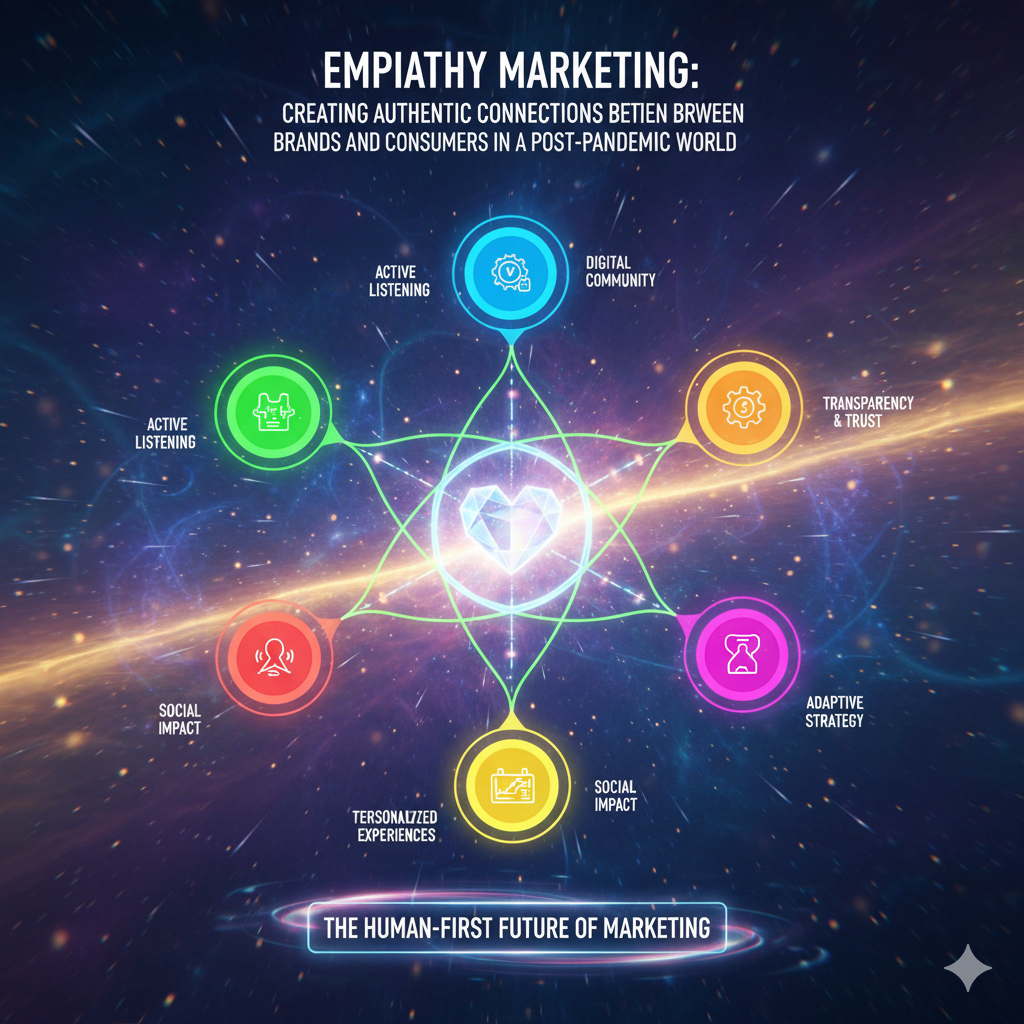
The events of the past several years since the pandemic have shown us just how important empathetic marketing is for businesses both large and small.
The world has changed dramatically, and businesses need to adapt to the new emotional needs of their customers if they want to grow. The best way to do that is through genuine empathy—a approach backed by compelling research showing that empathetic brands achieve 28% higher customer equity (Lee, 2016).
What is Empathy Marketing?
Empathy is the ability to see events and situations from another’s perspective—to truly put yourself in their shoes. For brands, empathetic marketing is about seeing the world through the user’s point of view. It helps you place the customer at the center of your marketing strategy and work outwards. But it’s crucial to remember that being empathetic also means being genuine. Empathy is believable when it creates authentic connections between brands and users, building trust and organic relationships throughout the customer journey.
Recent research reveals that neuroscience research by Rolls (2014) confirms that 95% of purchasing decisions are driven by emotional brain systems, explaining why empathetic connections are so powerful in marketing. Furthermore, Batson (2009) identifies that effective marketing empathy requires both cognitive understanding and genuine emotional concern.
Why is Empathy Important in Marketing?
There are numerous compelling reasons why empathy is important, especially in today’s evolving marketplace:
Emotion and connection are more necessary now than ever before. The way we live and work has changed in ways we couldn’t have imagined. “Business as usual” is a thing of the past, because significant emotion is being generated about the future, and these emotions impact how consumers react to marketing campaigns. Prasetyoh & Purnamasarit (2023) found that brands demonstrating authentic empathy during the pandemic gained significant market share by addressing genuine customer concerns.
The range of human emotion is massive, from positive emotions like joy, interest, and amazement, to the more negative, such as fear, anger, or sadness. Campaigns need to be geared towards evoking and connecting with these real emotions, addressing what Ingwer (2012) identifies as the “Hidden Emotional Needs” behind every decision.
The Science Behind Emotional Connection in Marketing
Additional research shows that companies that master empathetic marketing understand how to leverage both psychological principles and technological tools. Liu-Thompkins et al. (2022) demonstrate how artificial empathy can scale personalized connections while maintaining authentic emotional resonance. Meanwhile, case studies from Route’s compilation show that brands like IKEA and Gurmenitsa succeed by applying Kohler’s (1929) Gestalt principles—understanding the whole customer experience rather than isolated interactions.
How to Use Empathy in Marketing: A Research-Backed Approach
When the pandemic hit, brands instantly switched their gear and went from promoting their products to sharing helpful resources and motivational messages. In other words, they became more empathetic than ever before. Many companies are successfully utilizing the power of empathy to push their brands to the next level. Here are key ways to switch to an empathetic marketing mindset, supported by academic research and case studies.
1. Understand Your Audience’s Pain Points
Walking in your audience’s shoes means genuinely understanding what they need right now. This is the time to update your buyer personas to reflect the new realities your customers are experiencing, using frameworks like Davis’s (1983) Interpersonal Reactivity Index to deepen your understanding.
Customer empathy works in two crucial ways:
- What are the customer pain points in the real world?
- What are the customer pain points regarding your business?
In the real world, customers face numerous challenges including ongoing pandemic effects, economic uncertainty, health concerns, and social challenges. If your brand can step in to help with these feelings—such as offering virtual classes or providing meaningful entertainment—you’ll be able to make powerful connections with your audience, much like IKEA’s practical empathy in solving home living problems or Dove’s addressing of self-perception issues.
When it comes to customers’ pain points regarding your brand, deeper analysis is needed. Gorry & Westbrook (2011) emphasize the importance of combining technology with human understanding to identify these pain points effectively.
2. Adapt to Audience Needs with Genuine Solutions
When you understand what your audience needs from the world and from your brand, you must adapt your business model accordingly. With many individuals and businesses facing ongoing challenges, consider scaling back service fees, making some services free, and offering enhanced customer support—approaches that Andreasen & Kotler (2003) found build deeper trust in nonprofit contexts.
Take practical steps like adapting how customer-facing employees interact with customers and reminding teams how to display genuinely empathetic behavior. It’s also worth examining your current customer service processes to ensure your wording and tone are more empathetic, drawing from Kostadinova & Antonova’s (2018) research on competency in service industries.
3. Support Important Causes Authentically
Another powerful way to empathize with your audience is by showing genuine support for causes they care about. Research consistently shows that organizations that demonstrate authentic social impact resonate more with buyers than those that don’t.
Environmental consciousness represents a significant opportunity, as people increasingly consider planetary health. From packaging to production processes, identify areas where you can make sustainable improvements. Campaigns like Gurmenitsa’s “Super Rustic Manifesto” demonstrate how cultural values alignment builds powerful brand connections, while Kim & Sullivan (2019) show that cause alignment drives emotional branding success.
The Markempai EMPATHY Framework: Bridging Research and Practice
Building on these principles, we’ve developed a comprehensive framework that transforms research into actionable strategy:
E – Evaluate Emotional Needs using Ingwer’s 8 Hidden Emotional Needs framework
M – Map Holistic Customer Journeys using Kohler’s Gestalt principles
P – Personalize with Hybrid Intelligence combining AI and human compassion
A – Act with Authentic Solutions that pass the “Dove Test”
T – Train Teams in Empathetic Competency using healthcare-derived models
H – Harness Pro-Social Storytelling that builds tribal belonging
Y – Yield Measurable Returns through tracked empathy metrics
According to Pedersen (2021), companies that implement structured empathy frameworks see significantly improved customer loyalty and increased customer lifetime value.
Conclusion: Making Empathy Your Marketing Mindset
Empathetic marketing has become a critical priority for modern businesses. It’s no longer sufficient to simply talk about your products or the benefits of buying from your brand. Today, brands need to connect with customers on a deeper, more genuinely empathetic level, showing audiences that you understand their needs and are ready to adapt to them.
Including empathy in marketing campaigns represents more of a fundamental mindset than a temporary technique. To instill this thinking in marketing teams, follow these research-backed steps:
- Understand your audience’s current pain points through active listening and data analysis
- Adapt to their needs with authentic solutions and business model adjustments
- Take an educational approach in your marketing content
- Capture everyday life in campaigns through realistic storytelling
- Add interactive elements that demonstrate genuine engagement
- Utilize user-generated content to build community and authenticity
Each step proves vital because the changes we’re witnessing will have long-lasting effects. As Rust (2020) predicts, the future of marketing belongs to brands that make empathy their core differentiator. While taking an empathetic approach requires adjustment, the evidence clearly shows it’s not only possible but essential for sustainable business growth in our evolving marketplace.
Additional Sources & References
- https://marketingsherpa.com/article/case-study/empathy-marketing
- https://www.digitalsilk.com/digital-trends/customer-loyalty-statistics/
- https://www.ainoa.agency/blog/empathetic-marketing-guide-brand-empathy
- https://level343.com/search-marketing-articles/the-power-of-empathy-in-marketing/
- https://onlinelibrary.wiley.com/doi/full/10.1002/mar.22130
- https://www.researchandmetric.com/blog/consumer-psychology-buying-decisions-emotional-factors/
Related Markempai Resources
- Empathy-Based Marketing: Empathy-Based Marketing – markempai.com
- Empathy Maps: A Complete Guide: Empathy Maps: A Complete Guide – markempai.com
- Why Empathy in Marketing Is Important: Why Empathy in Marketing Is Important – markempai.com
- Why Empathy in Marketing Matters More Than Ever: An Evidence-Based Guide: Why Empathy in Marketing Matters More Than Ever: An Evidence-Based Guide – markempai.com
- The Importance of Empathy in Marketing: The Importance of Empathy in Marketing: A Three-Part Series – markempai.com
- Developing an Empathetic Marketing Strategy: A Framework for Authentic Connection: Developing an Empathetic Marketing Strategy: A Framework for Authentic Connection – markempai.com
- What Is Empathy in Marketing and Why It Matters: The Definitive Guide: What Is Empathy in Marketing and Why It Matters: The Definitive Guide – markempai.com
- Empathy in Marketing: The Definitive Guide to Connecting With Customers & Driving Unshakeable Brand Loyalty:Empathy in Marketing: The Definitive Guide to Connecting With Customers & Driving Unshakeable Brand Loyalty – markempai.com
- Empathetic Marketing: The Power of Empathy in Advertising That Builds Unbreakable Brand Loyalty: Empathetic Marketing: The Power of Empathy in Advertising That Builds Unbreakable Brand Loyalty – markempai.com
- The Role of Empathy in Modern Marketing: How Emotional Intelligence Drives Sustainable Business Success: The Role of Empathy in Modern Marketing: How Emotional Intelligence Drives Sustainable Business Success – markempai.com
- Empathetic Marketing: The Ultimate Guide to Building Authentic Customer Connections in 2025: Empathetic Marketing: The Ultimate Guide to Building Authentic Customer Connections in 2025 – markempai.com
Ready to Transform Your Marketing Through Empathy?
If you’re ready to harness the proven power of empathetic marketing, the team at Markempai is here to help. With our unique blend of psychological insight, strategic rigor, and creative excellence, we deliver measurable results that strengthen both your brand and your bottom line.
markempai.com |info@markempai.com