
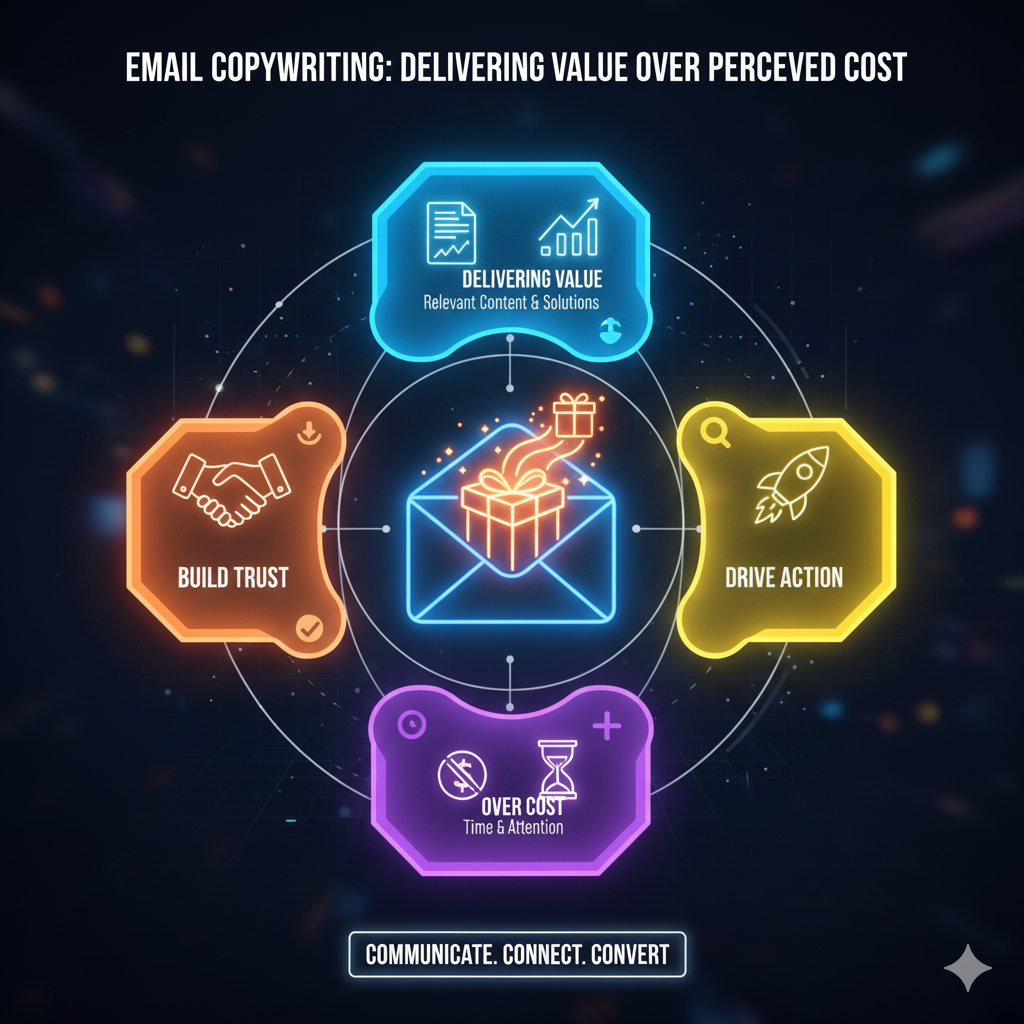
Introduction to Email Copywriting and Value Delivery
Email copywriting is an integral component of any successful marketing strategy.
As businesses increasingly turn to digital platforms for communication, the ability to craft compelling email content has become paramount. Effective email marketing not only involves the creation of engaging subject lines and persuasive body copy, but it also centers around delivering genuine value to the audience. Understanding the perceptions of cost held by potential customers can significantly influence their response to marketing communications.
By recognizing the needs and expectations of the audience, marketers can create messages that resonate deeply, taking a customer-centric marketing approach. This involves more than simply showcasing products or services; it requires the application of empathy in marketing to ensure that the recipients feel understood and valued. For instance, during a recent stroll through the luxurious Aria Resort, it became evident how a well-curated experience elevates perceived value. The ambiance, aesthetics, and attention to detail prompt visitors to consider the cost in a different light—one of value rather than merely expense.
This understanding can be directly applied to email campaigns. When crafting email content, it is important to think beyond just selling a product; instead, emphasis should be placed on how the offering addresses the needs and desires of the recipient. By employing strategies such as marketing automation and personalized messaging, marketers can streamline lead generation and lead nurturing processes, thus enhancing overall effectiveness. Emphasizing value not only encourages engagement but cultivates lasting relationships with the audience. Through well-designed email campaigns, businesses can shift perceptions of cost, positioning their offerings as valuable investments in the customers’ lives.
Understanding Perceived Cost vs. Actual Cost
In the realm of marketing, comprehending the distinction between perceived cost and actual cost is crucial for successful customer engagement. Perceived cost refers to the value that consumers ascribe to a product or service based on their individual experiences, knowledge, and expectations. This concept extends beyond the monetary aspect; emotional factors, societal influences, and the potential benefits derived from a product play significant roles in shaping perception. Actual cost, on the other hand, quantifies the financial outlay required to obtain a product or service.
The delineation between these two costs is particularly relevant in the context of email marketing and marketing automation. When crafting campaigns, understanding your audience’s perception allows marketers to position offerings effectively. For example, a higher-priced item may be perceived as more valuable if it is framed within the context of its unique benefits or the prestige associated with the brand. This is where customer-centric marketing comes into play, emphasizing the importance of aligning marketing strategies with the needs and preferences of the target audience. Utilizing empathy in marketing can further enhance this alignment, making consumers feel understood and valued.
Consumers are often willing to overlook higher monetary costs if they perceive a greater value related to the benefits received. As a result, implementing strategies focused on lead generation and lead nurturing is vital. By presenting information that highlights the utility and advantages of a product rather than merely its price, marketers can effectively shift consumer focus toward perceived value. As a result, emails that narrate success stories or showcase testimonials can lower the perceived cost in the eyes of potential buyers, leading to greater engagement and conversion rates.
READ MORE:
- Steps That Help Increase New Product Sales by 18% — With Empathy: 3 Steps That Help Increase New Product Sales by 18% — With Empathy – markempai.com
- Email Copywriting: Delivering Value Over Perceived Cost — With Empathy: Email Copywriting: Delivering Value Over Perceived Cost — With Empathy – markempai.com
- Email Marketing: Lead Nurture Paths You Should Automate: Email Marketing: Lead Nurture Paths You Should Automate – markempai.com
- Empathetic Marketing: The Power of Empathy in Advertising That Builds Unbreakable Brand Loyalty: Empathetic Marketing: The Power of Empathy in Advertising That Builds Unbreakable Brand Loyalty – markempai.com
Tactic 1: Crafting Irresistible Subject Lines
Creating compelling subject lines is paramount in email marketing, as they serve as the first impression and pivotal hook that entices recipients to open messages. To effectively engage audiences, marketers should employ techniques that leverage curiosity, incorporate a sense of urgency, and clearly articulate the value contained within the email. Each element plays a vital role in setting the stage for successful lead generation and nurturing processes.
One effective technique is to elicit curiosity through intriguing phrasing or questions. For example, instead of a generic subject line like “New Products Available,” a more compelling option might be “Discover What’s Missing from Your Routine.” This approach piques interest and compels recipients to open the email to learn more about the offering. By fostering a sense of intrigue, marketers can increase the likelihood of engagement, thereby enhancing the effectiveness of their marketing automation efforts.
Incorporating urgency is another powerful tactic, which can prompt immediate action from the reader. Subject lines such as “Last Chance: Save 30% Today Only!” signal limited availability, encouraging recipients to open and respond quickly. This tactic not only increases open rates but substantially contributes to conversions by fostering a fear of missing out, effectively enhancing customer-centric marketing strategies.
Additionally, clearly indicating the value of the email content is crucial. For example, a subject line stating “Unlock Exclusive Tips to Boost Your Productivity” immediately conveys to the reader that valuable insights await them. Such transparency builds trust with the audience and promotes a deeper connection through empathy in marketing, paving the way for sustained relationships. As marketers craft their subject lines, understanding the delicate balance between curiosity, urgency, and clear communication will enhance the perception of value, ultimately benefiting lead generation and nurturing initiatives.

Tactic 2: Highlighting Benefits Over Features
In the realm of email marketing, one of the most effective strategies for engaging customers is to highlight benefits over features. This approach is rooted in the principle of customer-centric marketing, which prioritizes the needs and desires of the target audience. By focusing on the practical advantages that a product or service offers, rather than merely listing its technical specifications, marketers can foster a stronger connection with potential leads. This technique not only differentiates a brand in a competitive market but also enhances lead nurturing efforts by establishing trust and demonstrating empathy in marketing communications.
To effectively identify key benefits that resonate with the audience, marketers must first conduct comprehensive research to understand their target demographic’s pain points and aspirations. This can be accomplished through surveys, interviews, and analyzing customer feedback. Once the primary needs of the audience are identified, it is essential to articulate how the product or service provides solutions to these challenges. For instance, if promoting a software tool designed for small businesses, it is far more impactful to emphasize how it saves time and reduces operational costs rather than simply detailing its features.
Effective communication of these benefits in email content involves crafting persuasive copy that not only informs but also inspires action. Utilizing storytelling techniques, testimonials, and case studies can illustrate real-world applications of the product, thereby making the benefits more tangible for readers. Integrating visuals that complement the copy can further enhance understanding and retention. Ultimately, by delivering emails that prioritize the benefits associated with their offerings, brands can increase perceived value, thus improving customer engagement and driving conversions on platforms like darkgreen-kingfisher-755672.hostingersite.com. This strategy supports both lead generation and long-term customer loyalty.
Tactic 3: Utilizing Testimonials and Social Proof
In the landscape of email marketing, the integration of testimonials and social proof stands as a pivotal strategy for enriching persuasive content. This approach not only amplifies the perceived value of an offer but also fosters trust and credibility among potential customers. By showcasing authentic experiences from satisfied clients, businesses can effectively convey their commitment to quality and customer satisfaction, driving engagement through empathetic communication.
To leverage testimonials effectively, it is essential to curate genuine feedback from your audience. This can include quotes from customers, case studies, or endorsements from influencers within your industry. When integrating these elements into your email copy, consider using visually appealing formats such as pull quotes, star ratings, or customer images. These presentation techniques not only enhance readability but also draw the reader’s eye toward the testimonials, maximizing their impact on lead generation and nurturing processes.
The placement of social proof within your email content should be strategic. A common best practice is to position testimonials near the call-to-action (CTA), as this reinforces the message you wish to convey and helps to mitigate any hesitation potential customers may feel. Additionally, segmenting your audience to tailor testimonials that resonate with specific demographics can boost the effectiveness of your messaging. Empathy in marketing involves understanding your audience’s pain points and showcasing relatable experiences that alleviate concerns, making the offer appear more valuable.
In conclusion, harnessing the power of testimonials and social proof not only enriches email marketing campaigns but also enhances the overall customer experience. By adopting these strategies, businesses can effectively nurture leads, foster trust, and ultimately drive conversions, positioning themselves as leaders in customer-centric marketing approaches.
Implementing a Strong Call-To-Action
A well-crafted call-to-action (CTA) is pivotal in effective email marketing, serving as the bridge between customer interest and actual conversion. When designing a CTA, it must be both clear and compelling, aligning seamlessly with the value proposition presented in the email. The objective is to reinforce the benefits previously communicated, encouraging recipients to take the desired action, whether that be making a purchase, signing up for a newsletter, or engaging with marketing automation tools.
One effective strategy for crafting impactful CTAs is to employ strong action verbs that evoke a sense of urgency. Words like “Discover,” “Join,” or “Get Started Today” not only compel readers to click but also align with the essence of customer-centric marketing. This empathetic approach recognizes and addresses the recipient’s needs, offering a solution precisely when they require it. Moreover, integrating consistent messaging throughout the email helps establish a coherent narrative, reducing barriers and enhancing lead nurturing efforts.
The placement of the CTA within the email is equally crucial. A CTA positioned above the fold ensures immediate visibility, while additional CTAs positioned at the bottom can cater to those who have taken the time to digest the content. A/B testing different placements and formats can significantly refine your strategy, optimizing the email’s effectiveness in generating leads. Each click on the CTA not only signifies an interested customer but also represents a critical step in the overall lead generation process.
Ultimately, the relationship between the CTA and the overall value proposition should be reciprocal. The CTA should unequivocally highlight the benefits the customer stands to gain, ensuring it resonates with their motivations. By implementing a strong call-to-action, businesses can enhance their email marketing efforts, fostering deeper connections through empathy in marketing initiatives that drive sustained engagement and conversion.
The Role of A/B Testing in Email Copy Optimization
A/B testing, also known as split testing, is a crucial aspect of email marketing that allows marketers to determine which elements of their email copy produce the best results. By comparing two variations of an email, marketers can gain insights into their audience’s preferences and optimize their campaigns accordingly. This process involves changing specific elements such as subject lines, body content, or call-to-action (CTA) buttons to identify the most effective combinations that resonate with readers.
One of the primary benefits of A/B testing in email marketing is its ability to enhance lead generation and lead nurturing efforts. By systematically testing different aspects of an email, marketers can refine their customer-centric marketing strategies, ensuring that communications are tailored to meet the needs and preferences of their audience. For instance, subject lines can significantly impact open rates; testing different phrases can help identify what captures attention most effectively. Similarly, experimenting with various body content formats can unveil insights into which style enhances engagement and drives conversions.
To conduct effective A/B tests, it is essential to establish clear hypotheses before initiating the tests. For example, if you believe that a subject line with a question might prompt higher open rates, create two versions: one with a question and another with a statement. It is imperative to test one element at a time to accurately assess the impact of that specific change. Moreover, ensuring a sufficiently large sample size will result in more reliable data, which is pivotal in deriving actionable insights. Utilizing marketing automation tools can streamline this process, making it easier to segment audiences and analyze results swiftly, leading to data-driven decisions that enhance the overall effectiveness of email marketing campaigns.
Analyzing Success Metrics
In the realm of email marketing, success metrics play a pivotal role in evaluating the effectiveness of email copywriting efforts. As businesses increasingly rely on data-driven decision-making to enhance their marketing strategies, it becomes vital to dissect key performance indicators such as open rates, click-through rates, and conversion rates. Each metric provides valuable insight into how well email campaigns resonate with the target audience and their relevance in the broader context of customer-centric marketing.
The open rate indicates the percentage of recipients who open an email, serving as a benchmark for the appeal and effectiveness of the subject line. A higher open rate suggests that the email’s subject line and sender name successfully capture the audience’s attention. Consequently, marketers should analyze this metric to refine their strategies and improve future campaigns. This metric is particularly relevant in marketing automation, where automated messages often rely on engaging subject lines to entice recipients.
Click-through rates (CTR) delve deeper into recipient engagement by gauging the percentage of individuals who click on links within an email. This metric is crucial for assessing the effectiveness of call-to-action buttons and the overall content relevance. By monitoring CTR, businesses can better understand how well they are nurturing leads and which aspects of their email copy compel users to take desired actions.
Finally, conversion rates measure the effectiveness of email campaigns in driving actions aligned with business goals, such as purchases or sign-ups. Understanding conversion rates allows marketers to gauge the true value of their email marketing initiatives and identify opportunities for improvement. By honing in on these essential metrics, businesses can ensure empathy in marketing, tailoring their approaches to better meet customer needs while continually delivering value over perceived cost. By leveraging insights from success metrics, companies can refine their email strategies, ultimately leading to more effective lead generation and nurturing practices.
Conclusion: Elevating Your Email Copy to Deliver Value
In the ever-evolving landscape of digital marketing, delivering value through effective email copywriting is more crucial than ever. It is essential for businesses to focus on customer-centric marketing strategies that ensure their messages resonate with their audience. By employing the tactics discussed, marketers can not only enhance their email marketing efforts but also boost lead generation and lead nurturing outcomes.
Understanding the importance of empathy in marketing is a pivotal component of this approach. By recognizing and addressing the unique needs and preferences of customers, marketers can craft email copy that speaks directly to their audience. This tailored communication fosters stronger relationships and enhances customer loyalty, which in turn can lead to improved conversion rates.
Additionally, incorporating marketing automation tools can significantly streamline the email copywriting process, allowing for more personalized and timely communications. By leveraging these tools, marketers can automate follow-ups and segment their audience, ensuring that each email delivered is relevant and valuable. This approach can further enhance the overall effectiveness of email campaigns, ultimately leading to a higher return on investment.
As you refine your email copywriting techniques, it is essential to remember that the focus should always be on providing value over perceived cost. By adopting a strategy centered around authenticity and customer empathy, you will not only improve your email marketing results but also contribute to a more meaningful interaction with your audience.
Further Reading & Research:
- The Ultimate Guide to Search Engine Marketing: The Ultimate Guide to Search Engine Marketing – markempai.com
- Digital Marketing Strategy: Digital Marketing Strategy – markempai.com
- Optimizing for GEO and AEO in 2025: Optimizing for GEO and AEO in 2025 – markempai.com
- What Is Digital Marketing?: What Is Digital Marketing? – markempai.com
- Best Digital Marketing Practices In 2025: Best Digital Marketing Practices In 2025 – markempai.com
- Generative Engine Optimization (GEO) Is the New Data Moat — Built by Engineering RAG: Generative Engine Optimization (GEO) Is the New Data Moat — Built by Engineering RAG – markempai.com
- Email Copywriting: Delivering Value Over Perceived Cost: Email Copywriting: Delivering Value Over Perceived Cost – markempai.com
- Steps That Help Increase New Product Sales by 18% — With Empathy: 3 Steps That Help Increase New Product Sales by 18% — With Empathy – markempai.com
- Email Copywriting: Delivering Value Over Perceived Cost — With Empathy: Email Copywriting: Delivering Value Over Perceived Cost — With Empathy – markempai.com
- Email Marketing: Lead Nurture Paths You Should Automate: Email Marketing: Lead Nurture Paths You Should Automate – markempai.com
- Empathetic Marketing: The Power of Empathy in Advertising That Builds Unbreakable Brand Loyalty: Empathetic Marketing: The Power of Empathy in Advertising That Builds Unbreakable Brand Loyalty – markempai.com
- The Role of Empathy in Modern Marketing: How Emotional Intelligence Drives Sustainable Business Success: The Role of Empathy in Modern Marketing: How Emotional Intelligence Drives Sustainable Business Success – markempai.com
Ready to Transform Your Marketing?
If you’re ready to harness the proven power of empathetic marketing, the team at Markempai is here to help. With our unique blend of psychological insight, strategic rigor, and creative excellence, we deliver measurable results that strengthen both your brand and your bottom line.
markempai.com |info@markempai.com