
Introduction to Workflow Automation
Workflow automation has become an essential component in the contemporary digital landscape, serving as a critical mechanism for enhancing efficiency, accuracy, and overall productivity within various operational sectors. This concept revolves around the use of technology to streamline complex processes and reduce the need for manual interventions, ultimately allowing organizations to focus on more strategic endeavors. As businesses evolve, the significance of automating workflows increases, as teams struggle to manage an ever-growing volume of tasks that require orchestration across multiple applications and platforms.
The need for robust orchestration layers emerges from the inadequacies of basic app connections, which often fail to meet the demands of intricate workflows. Traditional integration methods typically connect applications on a superficial level, lacking the capacity to manage data transfers, conditional logic, and multi-step processes effectively. Workflow automation is, therefore, a solution that not only connects disparate systems but also enhances the interaction between them, enabling a seamless flow of information and reducing the chances of errors.
In this context, the focus turns to three prominent platforms: OpenAI MCP, Make.com, and n8n, each designed to provide unique capabilities for creating and managing automated workflows. OpenAI MCP centralizes advanced AI functionalities, allowing for the development of intelligent workflows that leverage machine learning capabilities. Make.com emphasizes user-friendly interface designs, making it accessible to those without extensive technical knowledge, while n8n stands out for its open-source nature, providing flexibility and customizability for more complex processes. Together, these platforms represent the forefront of workflow automation, each addressing specific organizational needs and use cases.
Understanding Orchestration vs. Simple Automation
In the evolving landscape of business processes, the distinction between orchestration and simple automation has become increasingly important. Traditional automation tools, such as Zapier, primarily focus on straightforward tasks, enabling users to set up simple event-driven workflows. These tools are effective for automating single-step actions, but they exhibit significant limitations when it comes to more complex operational needs.
Simple automation is typically limited to predefined steps that follow a linear path. For instance, a common use case might involve automating the transfer of data from one application to another whenever a specific trigger occurs. While this can enhance efficiency for basic tasks, it falls short in scenarios requiring nuanced decision-making, intricate flows, or adaptability to changes in business processes. Such limitations stem from the reliance on basic trigger-action pairs, thereby lacking the necessary framework to handle multi-step flows and branching logic.
On the other hand, orchestration encompasses a broader range of functionalities that are essential for modern enterprises. This process involves the coordination of multiple automated workflows, integrating diverse systems, and managing their interactions seamlessly. As organizations grow, the need for scaling automation becomes critical, which is where orchestration tools excel. They offer robustness in governance, allowing for the establishment of protocols and compliance measures that simple automation tools typically do not address adequately.
Furthermore, orchestration empowers businesses to implement conditional logic, making it possible to adapt workflows based on real-time data or changing parameters. By leveraging this advanced capability, organizations can ensure that their automated processes are not only efficient but also responsive to evolving demands and complexities inherent in a dynamic business environment. Ultimately, understanding these distinctions is crucial for businesses looking to choose the right workflow builder that aligns with their operational needs.
Overview of OpenAI MCP and the Agentic Stack
The OpenAI Model Context Protocol (MCP) represents a transformative approach in the realm of automation and artificial intelligence. By integrating the capabilities of ChatGPT within an interactive control plane, MCP facilitates a seamless interaction between users and various software applications. This methodology effectively bridges the gap between natural language processing and operational workflows, enhancing overall productivity and efficiency.
At the core of the MCP is the fusion of conversational AI with standard connectors that streamline the execution of tasks across multiple platforms. Through its architecture, the MCP allows users to manipulate and manage different workflows without the need for extensive programming knowledge. This accessibility is particularly beneficial for businesses looking to leverage AI capabilities without significant technical investment. By employing the MCP, businesses can automate routine tasks, optimize resource allocation, and respond to user inquiries in real-time, making it an innovative tool in the automation landscape.
The concept of the Agentic Stack complements the functionalities provided by the MCP. It embraces a layered approach to automation, combining various AI agents and tools that operate cohesively to achieve desired outcomes. This stack enables organizations to design customized solutions tailored to specific needs, promoting adaptability in workflows. By harnessing both the MCP and the Agentic Stack, enterprises can create sophisticated automated systems, empowering staff to focus on more strategic objectives rather than monotonous tasks.
Overall, the integration of OpenAI MCP into the Agentic Stack presents a powerful paradigm shift for businesses and developers alike. As automation and AI technologies continue to evolve, the significance of adopting solutions like MCP will only amplify, ushering in a new era where intelligent workflows become a standard expectation rather than a competitive advantage.
Exploring Make.com: Features and Capabilities
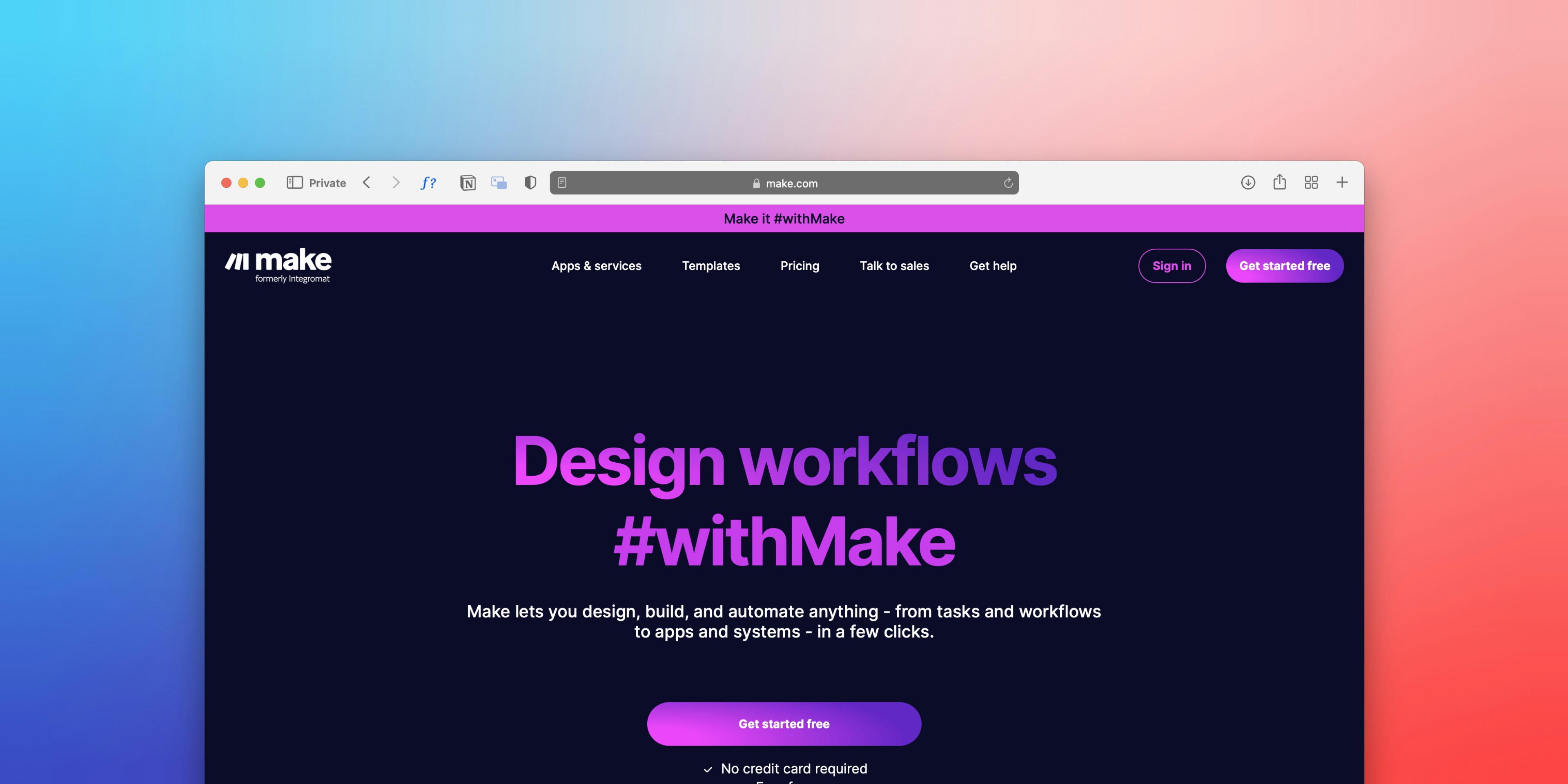
Make.com is a robust platform designed for workflow automation, enabling users to orchestrate complex processes seamlessly. One of its standout features is the intuitive visual editor, which allows users to create workflows by connecting various applications and services. This drag-and-drop interface facilitates the orchestration of tasks without requiring extensive technical expertise, making Make.com accessible to both novice users and experienced developers.
The platform supports a wide array of integrations, boasting compatibility with over a thousand applications. This diverse ecosystem allows users to automate interactions across different tools, significantly enhancing productivity. By leveraging APIs, Make.com connects to popular platforms such as Google Workspace, Slack, and Trello, enabling data flow between disparate systems. This capability is crucial for users looking to streamline their operations and minimize manual data entry tasks.
Another significant advantage of Make.com lies in its capacity to execute complex workflows. Users can employ conditional logic, loops, and error handling within their scenarios, ensuring that workflows adapt to real-time data and maintain efficiency. This flexibility is particularly valuable in dynamic environments where processes may need to adjust based on specific criteria or user inputs.
Moreover, Make.com offers robust collaboration features. Teams can work together on shared workflows, enabling collective troubleshooting and iterative development. This collaborative approach not only enhances workflow design but also fosters a sense of teamwork, making it easier to achieve organizational goals. The platform’s user community further enriches the experience, providing a space for sharing tips and discovering new scenarios that can improve workflow efficiency.
In conclusion, Make.com stands out as a powerful solution for workflow automation, equipped with features that facilitate the creation of complex, multi-step processes. Its user-friendly interface, extensive integrations, and collaborative tools position it as a valuable choice for users seeking to enhance operational efficiency through automation.
.
Examining n8n: A Powerful Alternative
n8n is an open-source workflow automation tool that has gained traction for its robust capabilities and user-friendly interface. This platform stands out in the workflow automation landscape due to its unique features and flexibility, catering to both developers and non-developers alike. One of n8n’s most notable attributes is its ability to create complex workflows effortlessly, enabling users to connect various applications and automate tasks with minimal coding knowledge.
The platform offers a visual workflow editor that allows users to design workflows by connecting nodes, which represent different applications or services. This intuitive setup not only enhances the user experience but also reduces the learning curve for new users. Furthermore, n8n supports a wide range of integrations, boasting compatibility with over 200 different services. This extensive list means teams can seamlessly incorporate n8n into their existing tech stack, achieving greater efficiency.
Another significant advantage of n8n is its flexibility. Users can create custom nodes tailored to their specific needs, allowing for bespoke automation solutions that are unique to any organization. This adaptability makes n8n an attractive option for businesses seeking to implement custom workflows that align closely with their operational requirements.
Additionally, the platform’s open-source nature fosters a vibrant community continuously contributing to enhancements, ensuring that n8n evolves in line with user needs and technological advancements. Teams looking to explore automation solutions can benefit from the collective knowledge of this engaged community.
In summary, n8n emerges as a potent alternative in the realm of workflow builders. Its flexibility, ease of use, and extensive integrations position it as a compelling choice for organizations aiming to improve their automation capabilities, regardless of their technical proficiency. By considering n8n, teams can tap into the potential for streamlined operations and enhanced productivity.

Comparative Analysis of Strengths and Use Cases
In the landscape of workflow automation, three platforms have emerged as noteworthy contenders: OpenAI MCP, Make.com, and n8n. Each of these tools carries unique strengths and caters to different user profiles, making it essential for potential users to understand their specific advantages and cases of optimal use.
OpenAI MCP stands out for its robust capabilities in integrating artificial intelligence into workflow processes. This platform is particularly beneficial for users seeking to leverage machine learning and natural language processing. Its user-friendly interface allows for constructing automated workflows that are both sophisticated and intelligent. OpenAI MCP is ideally suited for tech-savvy professionals and organizations aiming to enhance customer engagement through automated conversations or complex data processing tasks. However, it may require a steeper learning curve for those unfamiliar with AI-driven technologies.
On the other hand, Make.com (formerly Integromat) excels in providing a no-code solution that simplifies the connection of various apps and services. Its strength lies in its vast array of pre-built integrations and visual workflow builder, making it accessible for non-technical users. Businesses looking to streamline operations through straightforward automation can benefit greatly from Make.com. Nonetheless, its dependency on third-party applications can sometimes limit customization for more complex workflows.

Lastly, n8n is distinguished by its open-source framework, making it a favored choice for developers and businesses that prioritize customization and flexibility. The ability to self-host n8n provides organizations with enhanced control over their workflows and data. This platform is particularly well-suited for those who have specific automation requirements and possess the technical expertise to take advantage of its advanced features. However, non-developers may find using n8n challenging without the required coding background.
Ultimately, the choice between OpenAI MCP, Make.com, and n8n hinges on identified organizational needs, technical proficiency, and the complexity of automation desired.
Who Should Use Each Platform?
When considering the most suitable workflow automation platform, it is essential to match the specific needs of potential users with the capabilities offered by OpenAI MCP, Make.com, and n8n. Each of these tools serves distinct user demographics, varying from large enterprises to individual engineers.
OpenAI MCP is particularly ideal for organizations that prioritize advanced AI capabilities. Project managers, data scientists, and tech-savvy business owners can leverage the platform’s robust tools for building agent-first workflows powered by AI. This platform is well-suited for businesses looking to streamline operations by integrating artificial intelligence into their processes. Therefore, if your organization aims to enhance task automation and make use of cutting-edge AI models, OpenAI MCP may be the best choice.
In contrast, Make.com caters to users who seek a flexible, visual-oriented workflow builder. This platform is suitable for marketing teams, small to medium enterprises, and freelancers who require a straightforward interface for creating and managing workflows. The visual interface of Make.com allows users to quickly map out their processes, making it particularly useful for those with limited technical knowledge. Moreover, its integration capabilities with various applications empower users to connect systems effortlessly and automate routine tasks.
Lastly, n8n is targeted at developers and engineers who prefer customization and control over their workflow automation. This open-source platform appeals to tech-oriented users who want to modify workflows according to their unique requirements. With extensive support for various plugins and integrations, n8n allows engineers to build highly tailored solutions and delve into API interactions that suit their specific projects. Thus, n8n serves as the ideal choice for tech professionals looking for in-depth customizability.
Future of Workflow Automation
The landscape of workflow automation is poised for significant transformation as technology continues to advance. Key players in this sphere, including OpenAI, Make.com, and n8n, are expected to lead innovations that will shape the future of how businesses manage and optimize their processes. The integration of artificial intelligence (AI) is already impacting current tools, enhancing their capabilities to streamline operations and improve efficiency.
As AI becomes more sophisticated, it is anticipated that workflow automation tools will harness machine learning algorithms and natural language processing to understand user intents better and automate repetitive tasks with greater accuracy. This trend towards AI-driven automation will likely result in more intuitive user interfaces and seamless integration with various applications, allowing users to create workflows that are not only functional but also adaptive to changing needs.
Moreover, orchestration layers will evolve to facilitate interoperability among diverse systems. The future may witness a shift towards more decentralized and flexible architectures, enabling organizations to create custom workflows that better suit their operational requirements. OpenAI may enhance its offerings with advanced cognitive functions, thereby equipping users with more powerful automation capabilities. Similarly, Make.com could benefit from innovations in modular design, allowing users to customize workflows more easily. n8n’s open-source nature provides a unique advantage, fostering a community-driven approach to enhancements and features that respond to specific user demands.
In conclusion, as workflow automation technologies continue to evolve, the integration of AI and a focus on user-centric designs will play pivotal roles. The competition among OpenAI, Make.com, and n8n will likely drive further advancements, ultimately leading to more capable, adaptable, and efficient solutions that meet the needs of modern enterprises.
Conclusion: Making the Right Choice
In the competitive landscape of workflow automation, selecting the most suitable tool is crucial for achieving efficiency and aligning with organizational goals. This analysis has shed light on three prominent options: OpenAI MCP, Make.com, and n8n. Each workflow builder presents unique features, strengths, and potential limitations, which should be carefully evaluated against the specific needs of your team and processes.
Firstly, OpenAI MCP is designed to integrate advanced artificial intelligence capabilities, making it an excellent choice for teams that require sophisticated automation features powered by machine learning. Conversely, Make.com boasts a user-friendly interface and offers extensive integrations with various applications, catering to teams that may not have a technical background but still seek robust automation solutions. Lastly, n8n stands out for its open-source nature, allowing for on-premise deployment and customization, making it ideal for organizations that prioritize data privacy and require specific workflows tailored to their operations.
When determining the best workflow builder, it is essential to assess factors such as team proficiency, scalability requirements, integration capabilities, and budget constraints. Engaging with team members in discussions about their daily tasks and pain points can provide invaluable insights to identify which tool may facilitate smoother operations. Additionally, considering the long-term vision of your organization can further guide this decision, allowing you to choose a solution that not only addresses immediate needs but also adapts to future challenges. By concentrating on the synergies between the workflow builder’s features and the operational nuances of your organization, you can make an informed decision that empowers your team to optimize productivity and streamline processes effectively.